


Donate for Tree Plantation to Grow Your WB Industry
- October 10, 2025
- 0
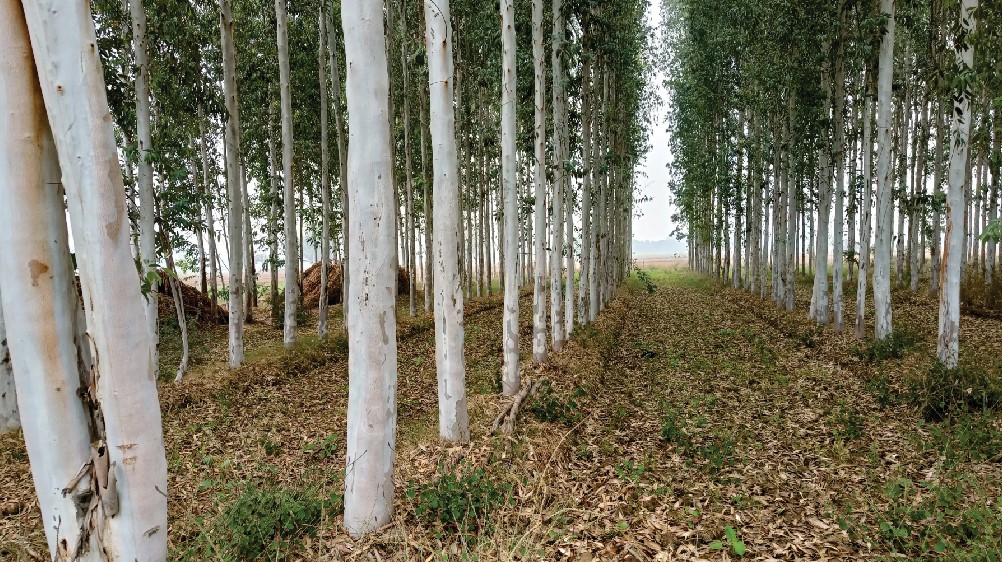
Pollution will be reduced, farmers will become stronger, industry will get good quality wood;
Ph D from University of Oxford and Bangor, the UK National Project Coordinator, of All India Coordinated Research Projects on Bamboo and All India Coordinated Research Projects on Dalbergia Sissoo Member Advisory Board of National Bamboo Mission, New Delhi
How do you see the biggest problem of the plywood and panel industry, i.e. shortage of raw material, in the Present Scenerio?
The raw material problem in Plywood & Panel Ind. exists at many levels. At present, Tree production is less compared to demand. The biggest issue is that the quality of Indian raw material is deteriorating day by day. Earlier, the tree harvesting cycle was six years, but now it has reduced to three or two years, directly impacting quality.

The second problem is geographical imbalance. For example, poplar is available in Haryana, but other woods are scarce. In other states, the situation is just the opposite.
The shortage of face veneer is still a major issue because it requires older trees that take 15–20 years to mature. Farmers usually don’t keep trees for that long. This is why the industry has become heavily dependent on imported wood. There is no alternative yet.
Timber prices are currently high, increasing production costs for the industry. In the near future, the shortage of wood will continue.
It is said that Haryana is doing quite well in plantation, yet most of the raw material is coming from UP. Why is that?
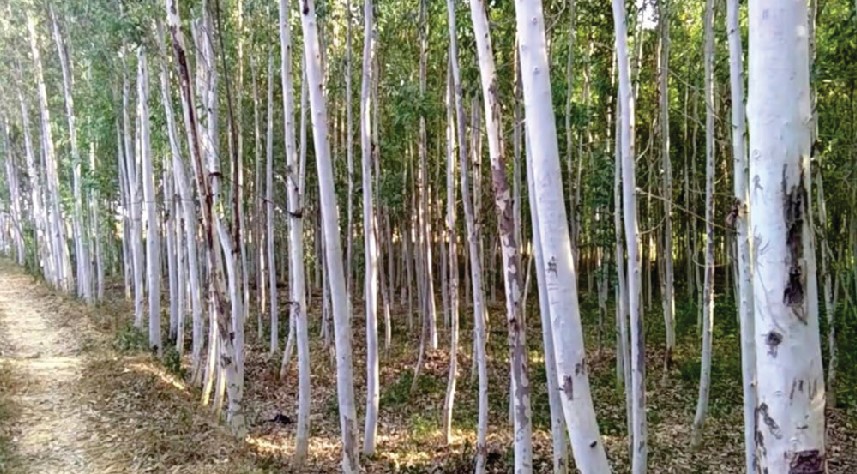
The area under poplar plantation is increasing in Haryana. But Haryana has more plywood industries, so demand for raw material is higher. That’s why wood is being brought from UP. However, eucalyptus is coming more from UP than poplar. The poplar grown there is mostly consumed within UP itself.
Now Rudrapur in Uttarakhand has developed as well. The panel industry is growing continuously in both Uttarakhand and UP. Hoshiarpur has also developed its own mandi. As a result, raw material from Jammu and Srinagar usually reaches only upto Pathankot and Hoshiarpur. Beyond that, transporting raw material from Jammu becomes costlier.
 What is lignin in wood?
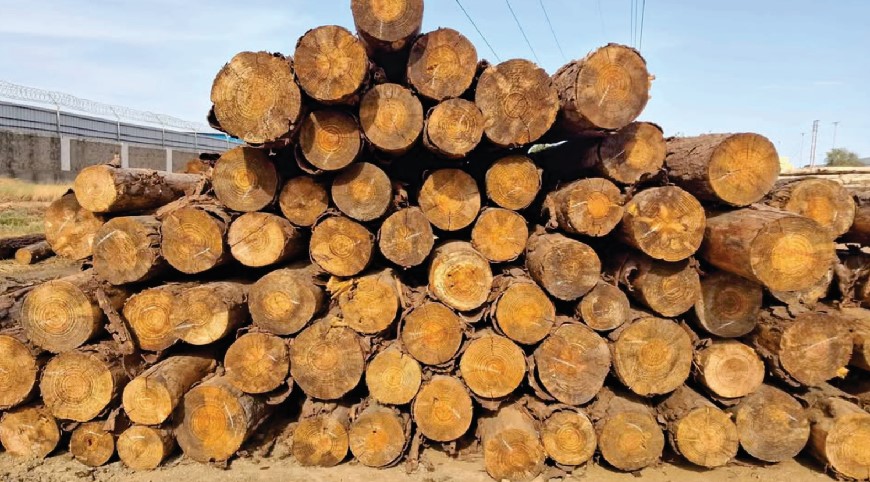
Lignin is one of the major components of wood. About 95% of wood consists of two main elements: cellulose and lignin. You can think of lignin as the bones of wood, while cellulose is like the muscles.
The paper industry prefers wood with more cellulose. But in the plywood industry, lignin has relatively greater importance because it provides strength to the wood. So, plywood made from wood with the right amount of lignin has better durability and performance.
For this reason, we signed an MoU with FIPPI to develop plant varieties with increased lignin content. Such plants will be made available to farmers for plantation, in future with cellulose and lignin balanced in the right proportion.
The plywood and timber industry also must recognize this and encourage plantations with higher lignin content, as this will strengthen the industry’s future.
 What is the role of farmers in this? Is there a lack of coordination between industry and farmers?
Absolutely. Farmers will plant only those trees, which they can easily sell to the nearest industry and earn more profit. So, the first step is for the industry to clearly define what kind of wood they need as raw material and what varieties they see as the future of their industry.
Farmers will plant only those varieties which are in demand. Hence, the industry must take the initiative to create demand.
The problem is that the industry hasn’t clearly communicated to farmers about the type of wood it will need in the future. Unless the industry supports farmers with encouragement and assures them of a reliable market, this issue will persist.
Imports of pine is rising. Is it possible that the plywood industry could shift to pine?

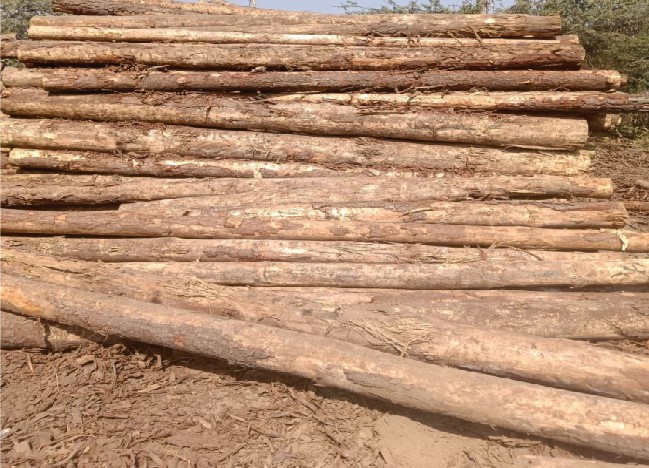
For the plywood industry, pine is not a choice by preference. Its current usage is increasing because pine wood is straight and round, and many countries have it in abundance.
But pine isn’t suitable for the climate of most of the parts of India — it grows better in colder regions. So it will always need to be imported. That’s why it’s wrong to say that pine can replace poplar. Poplar has its own utility. Pine’s growth isn’t higher than poplar’s, and extensive research has already been done on poplar in India.
In foreign countries, forestry is done on a large scale with 12–15–18-year cycles. There, plantations cover kilometers of area, and harvesting is done in proportionately. As for imported raw material, nobody can predict future issues. So, even though pine is used today in plywood, it cannot replace poplar.
 What impact will the upcoming 2030 carbon neutrality rules and the Paris Agreement have on our industry?
India has signed the Paris Agreement, which means we must reduce our carbon emissions. From 2030 onwards, every industry, big or small, will be required to conduct carbon audits.
India’s target is to cut its emissions by 50% by 2050 and achieve net-zero emissions by 2070. Regular audits will be conducted to ensure this.
Industries will need to report how much carbon they emit, not just from factories but also from transportation of raw materials and diesel consumption.
Industries with higher carbon footprints, such as thermal power and construction, will face greater pressure. Timber industries too will have to demonstrate how they reduce carbon emissions.
So, are these rules a challenge for the timber industry or an opportunity?
This is actually a unique opportunity for the timber industry. Trees absorb carbon dioxide and release oxygen. So, naturally, the wood industry contributes for reducing carbon.
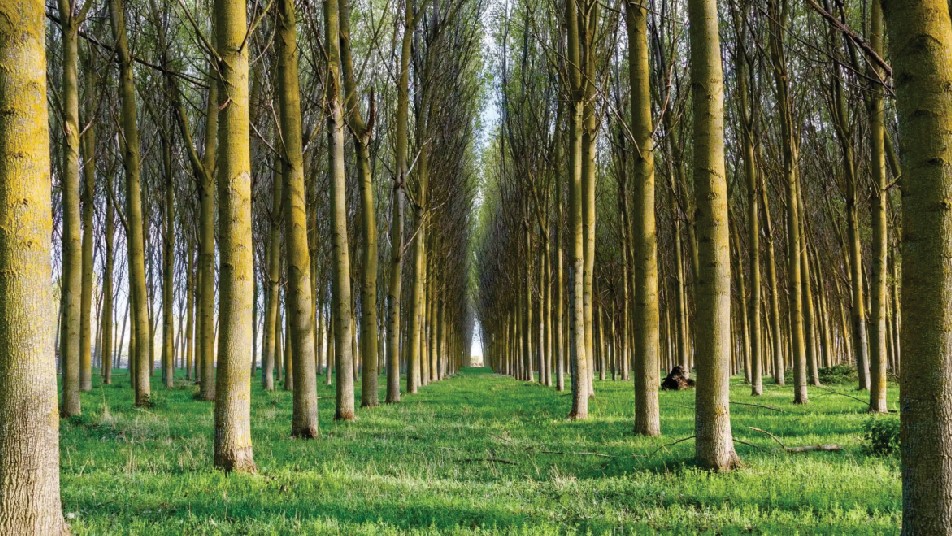
Since the wood industry promotes plantation, companies who have their own plantations can claim to be carbon neutral. For example, if a company has a 4-year crop cycle and harvest 25% every year, they can claim that 75% of their trees are always absorbing carbon. This not only ensures compliance with rules but also builds a positive brand image.
 What solutions would you suggest?
The most effective method is a consortium approach — where multiple companies come together to jointly invest in research, development, and plantations. This will ensure good quality raw material without burdening any single company.
The biggest obstacle is perhaps mutual distrust or competition among industrialists. Until this mindset changes, collective work will be difficult. But the industry must come forward — everyone will need to participate and contribute funds.
If companies work with a broad vision, solutions are possible. In the future, the government will also decide how much exemption from carbon credits a company can receive.
We must with connected spirituality tree plantation. It is not only business but also a social and environmental responsibility. Plantation can be done collectively, as community. Funds should be created, and farmers and land be identified. Wood can always be transported from anywhere if land is not available locally.
You suggested an interesting idea that investment in plantation should be seen as “charitable
Yes, I believe this can bring a change in mindset. Industrialists spend a lot on charity and donations. If they see tree plantation as religious or charitable, they won’t hesitate to invest in it. Rather they will invest money without expecting any ROI. It should be seen not as a business for profit, but as a social and environmental responsibility.
This concept can encourage long-term investment because people will not think only for profit and loss, but will act out of self-motivation, bringing very positive results.
 What is the role of government in this?
The government’s role is very important. I have heard that Minister Kirtivardhan Singh is aware of the industry’s problems. He knows how farmers are sometimes forced to sell their produce cheaply to middlemen.
The government is considering exempting certain species like teak and shisham from strict rules so that farmers can cut and sell them easily.
Kirtivardhan Singh’s father had once started an experiment in his region: whenever a child was born in the community, he used to gift teak saplings saying this would help the child in the future. Because of his efforts, a huge teak forest developed in that area. When restrictions on harvesting teak is removed, this region will see significant economic progress.
Finally, what message would you like to give the industry?
My message is simple: this is the time to wake up. The industry must accept that the problem is real and belongs to all of us. One major weakness of the plywood industry is its short-term outlook. It has not planned for the future.
But now, environmental regulations and raw material shortages are forcing change. The wood industry already has QCO (Quality Control Order) in place. Awareness is no longer optional. If the industry still does not take collective steps in the right direction, the future will be very difficult.
Cooperation, foresight, and the right investments is the only way forward.
👇 Please Note 👇
Thank you for reading our article!
If you don’t received industries updates, News & our daily articles
please Whatsapp your Wapp No. or V Card on 8278298590, your number will be added in our broadcasting list.


 Hindi
Hindi 

Ply insight launched on March 2018 with a vision to make a platform to collaborate plywood MDF, Laminate, machinery manufactures with dealers in the Trade.
Categories
Useful Links
Follow Us