

Eased Plantation and forestry rule cheers industry
- February 12, 2026
- 0
India’s paper and pulp industry has been lobbying since 1970s to secure regulatory changes allowing plantations on forest land, a move that could provide relief to the struggling industry by reducing import dependence.
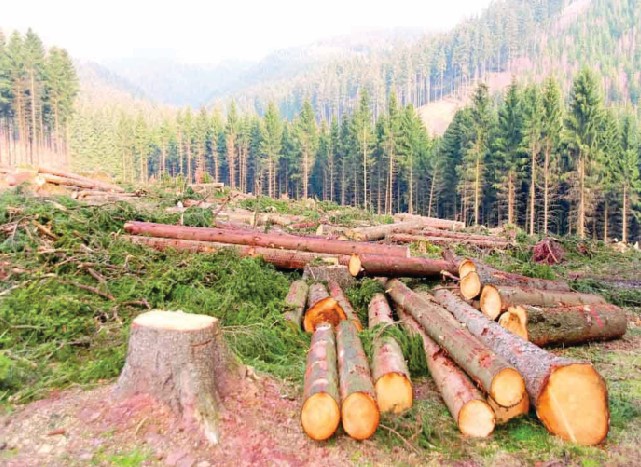
On January 6, 2026, the Union Ministry of Environment, Forests and Climate Change (MoEF&CC) notified an amendment to the Van (Sanrakshan Evam Samvardhan) Adhiniyam, 1980 — earlier known as the Forest Conservation Act, 1980 — granting direct access to forest land. Under the revised rules, private entities can now undertake commercial plantations in forest areas without paying long-standing environmental levies such as Net Present Value (NPV) and Compensatory Afforestation (CA).
NPV is one-time charge levied on users diverting forestland, based on a scientific calculation of the value of ecosystem goods and services such as clean air, water and biodiversity.
New rules on plantations and forestry
The Centre’s consolidated guidelines, originally notified on November 29, 2023, provided the terms and conditions for assignment of forestland on lease for raising commercial plantations of low rotations. The guidelines stated that plantation of medicinal plants in the forestland shall be considered non-forest activities and require prior approval of the Union government.
The latest amendment, however, states that assisted natural regeneration, afforestation and plantations carried out by government or non-government entities will be treated as “forestry activities”.
Rohit Pandit, secretary general of the Indian Paper Manufacturers Association (IPMA), told Down To Earth (DTE) that earlier guidelines issued in 2023 were primarily designed for mining projects and forest land leased for extraction purposes, where conditions such as NPV payments and CA applied.
“We had consultations with MoEF&CC and conveyed that these changes were unviable for the pulp and paper industry,” he said. “Mining industry extracts minerals and impacts the ecology so CA and NPV is required. Our proposal is to increase the green cover by short-rotation plantations on a large scale, and NPV and CA should not be applicable to industries contributing to the green cover.”
He added that the revised provision gives new hope to revive the sinking paper industry, and now it is up to the state governments to adopt and implement.
Wood shortages and rising demand
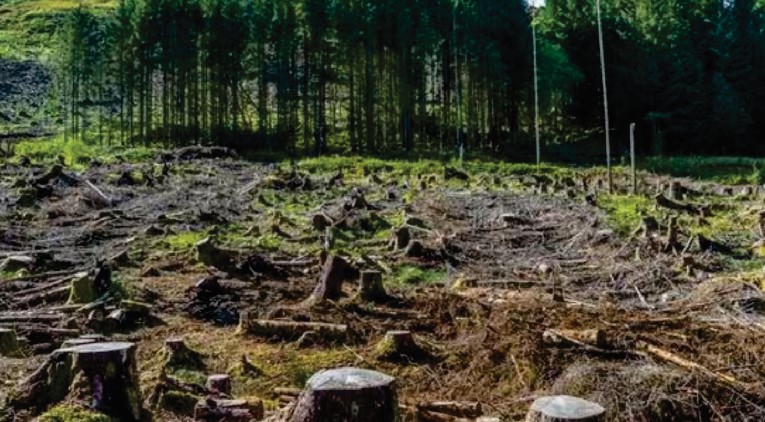
There have been long-standing concerns over a shortage of domestic wood availability, rising demand for paper, and growing dependence on imports, according to industry representatives. Paper manufacturers have persistently demanded addressing the widening gap between wood supply and consumption, which they argued has constrained domestic production and raised costs.
According to Indian Paper Manufacturers Association’s (IPMA) annual report for 2024-25, domestic wood availability is estimated at around nine million tonnes per annum, against a current demand of about 11 million tonnes. The amendment could help bridge this gap while also contributing to national greening targets, the report said.

Manufacturers also link their case to India’s climate commitments, arguing that commercial plantations can align with broader restoration goals. Under its Nationally Determined Contributions (NDC), India has committed to bringing an additional 25-30 million hectares of degraded land under forest and tree cover by 2030, creating an additional carbon sink of 2.5-3 billion tonnes of carbon dioxide equivalent.
In 2019, the central government also pledged to restore 26 million hectares of degraded land by 2030 separately as part of the 2011 Bonn Challenge by Germany and the International Union for Conservation of Nature.
The revised provisions have offered “new hope” for the industry by improving access to raw materials while contributing to land restoration, government revenue and rural livelihoods, Pandit said.
It is estimated that around 500,000 farmers are engaged in growing eucalyptus, subabul (Leucaena leucocephala), coastal she-oak (Casuarina equisetifolia), acacia, poplar (Populus), chinaberry tree (Melia azedarach), mango (Mangifera indica) and silver oak (Grevillea robusta) — species largely used in the industry. Around 1.2 million hectares is used for plantations across the country.
According to the India State of Forest Report 2023, around 92,989 square kilometres of land has been identified as suitable for potential upgradation, with an estimated carbon sequestration potential of 636.5 million tonnes.
Extracts from the article “Access Open: Why paper industry wanted forest rules eased,” published in ‘Down to Earth’ on 27 Jan 2026.
👇 Please Note 👇
Thank you for reading our article!
If you don’t received industries updates, News & our daily articles
please Whatsapp your Wapp No. or V Card on 8278298590, your number will be added in our broadcasting list.




 Hindi
Hindi 

Ply insight launched on March 2018 with a vision to make a platform to collaborate plywood MDF, Laminate, machinery manufactures with dealers in the Trade.
Categories
Useful Links
Follow Us