

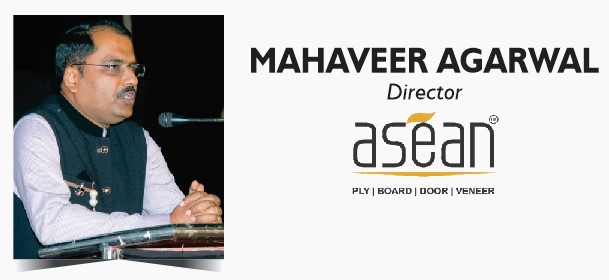
Need for Balanced Approach in QCO
- January 9, 2025
- 0
1.Why was there opposition to QCO in the plywood and panel industry?
There are several reasons for the opposition to Quality Control Order (QCO) norms in the plywood industry in India, reflecting the concerns of various stakeholders in the industry. The opposition to QCO in the plywood industry in India is driven by a complex interplay of economic, regulatory and quality considerations. There is a need for a balanced approach that ensures product quality while also taking into account the viability and sustainability of the industry, especially for smaller players. Some of the key points of contention are:
- Compliance costs: Financial burden
The imposition of QCO norms is likely to result in a significant increase in production costs for plywood manufacturers. Smaller companies are finding it particularly challenging to comply with the new standards, which may require investment in new machinery, technology and employee training.
- Market competition: Unfair advantage
Stringent norms may put small and medium enterprises (SMEs) at a disadvantage compared to (larger, well) established firms (who can absorb compliance costs more easily)
- Raw material quality: Availability issues
QCO requirements may require the use of higher quality raw materials which may lead to supply chain issues and increase costs.
- Employment impact
If small manufacturers are unable to comply with the norms and are forced to shut down, this could lead to significant livelihood losses in the sector, affecting thousands of workers who depend on plywood manufacturing for their livelihood.
- Regulatory overreach: Bureaucratic challenges
Some in the industry see QCO as an unnecessary regulatory burden that may add complexity to an already challenging business environment. And focusing on compliance may divert industrialists’ resources away from their core business, innovation and improving product quality.
- Existing standards: Adequate regulation
Some industry players believe that existing quality standards and regulation are already adequate and that self-regulation may be a more effective approach to maintaining quality than QCO.
- Concerns on enforcement: Implementation issues
There are doubts about how effectively the QCO norms will be enforced. There are concerns that without proper enforcement mechanisms, QCO may be limited to become government rules and laws.
- Possibility of increased prices: Consumer impact
The expected increase in production costs due to compliance with QCO norms may increase the prices of plywood products. This may negatively impact consumers and reduce overall demand.

- Have all the problems been resolved now? What changes are still required?
The implementation of Quality Control Order (QCO) in the Indian plywood industry is an important step towards ensuring product quality and consumer protection. However, the solution to all the related issues is nuanced and multi-faceted. While significant progress has been made in implementing QCO norms in the Indian plywood industry, several challenges still remain. It is important for stakeholders to continue to work collaboratively to resolve persistent issues to ensure compliance and raise industry standards. Continued support from the government and industry bodies will play a key role in achieving these objectives in the long term. Continuous monitoring, feedback mechanisms and adaptive strategies will be essential to overcome bottlenecks in the implementation process.
Key Challenges:
- ‘Certification and Testing Infrastructure:’ – Availability of accredited laboratories and testing facilities is critical for compliance. Limited access can delay or complicate the certification process.
- ‘Market Competition:’ – There may be disparities in compliance levels among manufacturers, leading to unfair competition. Non-compliant manufacturers may undercut those who invest in quality improvement.
- ‘Supply Chain Challenges:’ – Ensuring that raw materials also meet QCO standards is important. This will require a coordinated approach across the supply chain.
- ‘Regulatory Oversight:’ – The effectiveness of implementation depends on the ability of regulatory bodies to monitor compliance and consistently enforce standards across the industry.
- ‘Resistance to Change:’ – Some manufacturers, including micro, small and large companies, are resisting adoption of new norms due to their reluctance to move away from traditional practices or established procedures.
- Since when have you been familiar with BIS? What changes have you seen in it from the beginning till now?
We are familiar with BIS norms from the beginning and have successfully implemented it for our entire product range. The BIS department keeps making various changes from time to time and keeps us updated.
- How much do you agree with the changes made in the 303 standards? How helpful are they?
The changes in IS 303 have been made to some extent in the interest of the licensee, which has been helpful in complying with the BIS standard. We agree with this. Some changes have also been made in the norms of IS 710 which will surely help the industry.
- Do you think that QCO will be implemented on the scheduled date?
We think that the government will surely implement QCO on the scheduled date this time, because the uninterrupted flow of low quality and cheap imported products is having a very bad effect on our markets and all the producers of the country are suffering huge losses who are BIS license holders and follows the BIS standard.
- What problems will the industry face if QCO is not implemented on the stipulated date?
If QCO is not implemented on the stipulated date, the industry will have to face a lot of problems because it will have a huge negative impact on the industry and it will not be possible for our country’s BIS products to survive in the market against sub standard products. Due to the excessive availability of imported products in absence of QCO, which are also cheap, the sales of our BIS standard products are being very badly affected and production is becoming impossible.
👇 Please Note 👇
Thank you for reading our article!
If you don’t received industries updates, News & our daily articles
please Whatsapp your Wapp No. or V Card on 8278298592, your number will be added in our broadcasting list.



 Hindi
Hindi 

Ply insight launched on March 2018 with a vision to make a platform to collaborate plywood MDF, Laminate, machinery manufactures with dealers in the Trade.
Categories
Useful Links
Follow Us