


Productive Plantations Are Not the Industrialisation of Forests
- March 14, 2026
- 0
Recent criticism of the Ministry of Environment, Forest and Climate Change (MoEFCC)’s January 2026 circular permitting assisted plantations on forest land has sparked concerns that India is moving toward the “industrialisation” of forests.
However, a closer examination reveals that the reform is carefully structured, regulated, and rooted in scientific forestry principles. Rather than commercialising forests, the policy seeks to restore degraded forest lands, strengthen domestic wood security, and improve rural livelihoods.
The circular builds upon the Consolidated Forest Conservation Guidelines by allowing states to undertake assisted natural regeneration and plantations in collaboration with plantation companies, large farmers, and wood-based industries.
Importantly, these projects must operate under approved Working Plans and remain under strict supervision of State Forest Departments (SFDs).
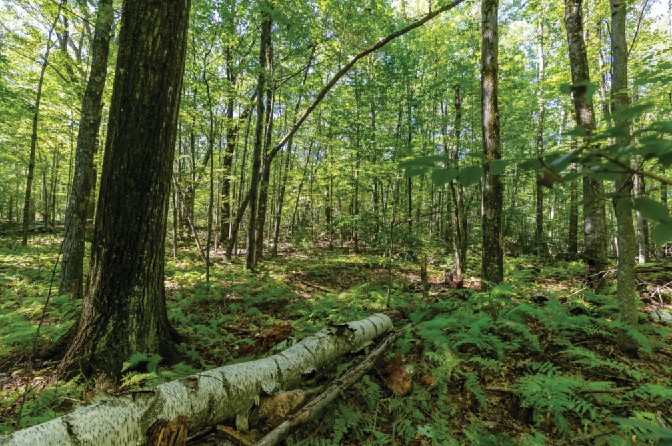
The plantations continue to be classified as forestry activities, ensuring that forest land retains its legal status, ecological safeguards, and regulatory oversight.
India’s forest management framework has historically balanced production, protection, and ecological objectives. The idea that productive plantations inherently undermine conservation is misleading. Production working circles have long coexisted with protection and regeneration zones. Regulated plantations of teak, sal, bamboo, conifers, and fuelwood species have been raised within forests through structured silvicultural operations for decades.
Production-oriented forestry is not new. Forest Development Corporations (FDCs), established in the 1980s, were allocated approximately 1.1 million hectares for production forestry. These initiatives did not result in systemic environmental or legal risks, challenging current alarmist narratives.
Instead, the present reform aims to revive scientific forestry practices after years of regulatory rigidity left large tracts of forest degraded and understocked.
Ecological safeguards remain central to the initiative. Selection of degraded areas, species choice, planting density, rotation cycles, and harvesting limits will continue to be regulated through approved Working Plans. Each project must be supported by a Detailed Project Report outlining area specifications, species composition, silvicultural techniques, and sustainable harvesting parameters.

Concerns regarding dilution of community rights under the Forest Rights Act are misplaced. The circular does not override statutory protections, and recognised rights remain subject to established consultative procedures. In fact, well-designed plantation programmes can generate employment, stabilise incomes, and enable revenue-sharing mechanisms determined by states—thereby strengthening rural livelihoods.
Opposition to assisted regeneration in scrub and open forests often ignores ecological realities. Many such landscapes are severely degraded due to invasive species, soil compaction, fire damage, and chronic grazing pressure. Treating degraded forests as ecologically equivalent to intact ecosystems hampers restoration efforts. Evidence from FDC plantations shows canopy cover improvements from 30–40% to as high as 80–90%, enhancing soil moisture retention, biodiversity recovery, and overall site productivity.
Financial constraints have long limited prescribed silvicultural operations. Carefully regulated private participation can mobilise investment, reduce fiscal pressure on state agencies, and improve plantation outcomes without compromising regulatory control.

Meanwhile, agricultural land must remain focused on food and energy crops, particularly as climate variability impacts yields. While agroforestry contributes to wood supply, it faces structural challenges including fragmented landholdings, long gestation cycles, and market volatility.
Indian wood-based industries currently procure farm-grown timber at around $200 per bone dry metric tonne (BDMT), compared to approximately $100 per BDMT in Southeast Asia. This cost disparity encourages imports, leads to foreign exchange outflow, and threatens domestic employment.
Production plantations on degraded forest lands can help stabilise raw material supply without discouraging agroforestry. Instead, they can complement farm forestry by ensuring industrial viability and sustaining market demand for domestic timber.
Concerns about corporate capture overlook existing governance safeguards. Ownership and regulatory authority over forest land remain firmly with State Forest Departments.

Private participation is contractual, regulated, and subject to strict supervision. States retain discretion over revenue-sharing frameworks, potentially strengthening public-private partnership (PPP) models.
Managed plantations also provide climate benefits by rapidly sequestering carbon, rebuilding soil organic matter, and reducing harvesting pressure on natural forests. Modern forestry increasingly recognises forests as renewable biological infrastructure capable of delivering ecological services, livelihood support, carbon storage, and industrial raw material simultaneously.
The real danger lies not in making forests productive, but in allowing them to remain degraded while India continues to rely heavily on timber imports. Scientifically regulated productive forestry offers a balanced pathway that supports conservation, strengthens rural economies, reduces import dependence, and reinforces long-term sustainability.
Such reforms deserve informed debate grounded in evidence rather than apprehension. Responsible scientific forest management is not industrialisation—it is a necessary step toward securing India’s ecological and economic future.


 Hindi
Hindi 

Ply insight launched on March 2018 with a vision to make a platform to collaborate plywood MDF, Laminate, machinery manufactures with dealers in the Trade.
Categories
Useful Links
Follow Us