


Real Challenges of the Indian Plywood Industry
- December 12, 2025
- 0
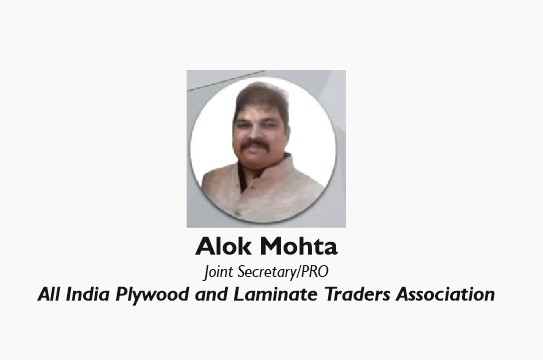
Edited excerpts from Ply Insight’s discussion with Mr. Alok Mohta, PRO and Joint Secretary of ABPLTA along with PRO of KGPLDA, on the challenges facing the plywood industry
What is the biggest problem in the Indian plywood industry today?
Industry’s biggest challenge is “extremely weak licensing and monitoring.”
He explains:
“Only about 25–30% of factories actually have a license. Another 5–10% have applied. Yet almost every plywood sheet in the market carries an ISI stamp. This clearly reflects a serious lack of monitoring.”
Does inspection or raiding create fear in the industry?
“A raid on one or two industries or retailers may harm their reputation temporarily, but it does not create any significant impact on the industry as a whole.”
How have large plants affected small manufacturers?
- Large groups are installing very high-capacity plants for plywood, particle boards, and MDF.
- This has created heavy pressure on raw material.
- Micro and small units are facing reduced purchasing power.
Many small manufacturers are unable to survive the segment competition.
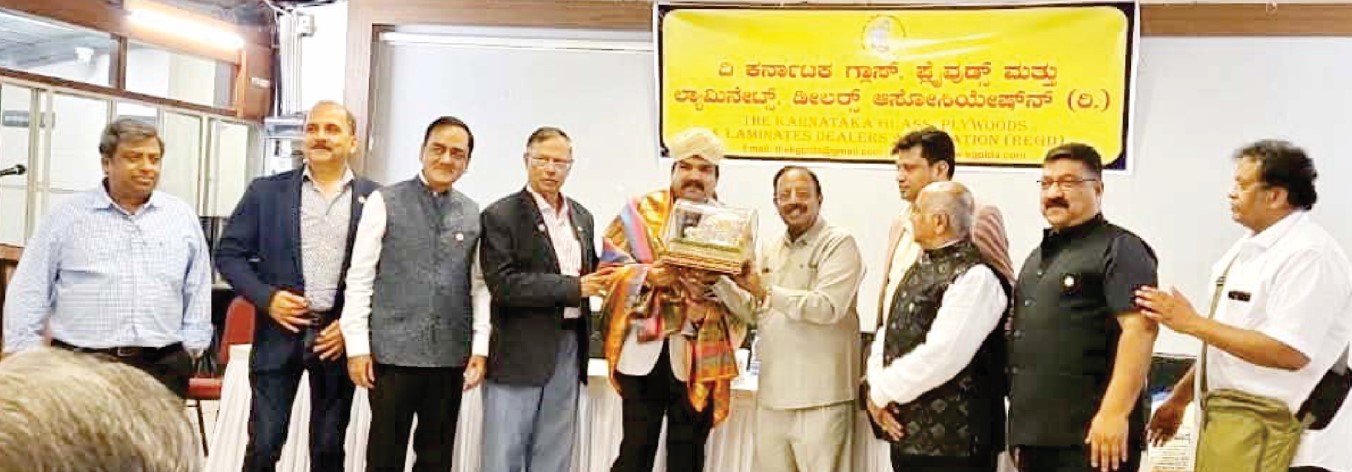
Mohta adds:
“Big companies are operating at only 50–60% of their capacity, yet they can absorb losses. This continuous pressure is weakening small industries.”
What is the situation regarding wood availability?
Although wood imports have increased, domestic production is consistently declining.
- Land near major cities, even tier II and tier III has become extremely expensive due to industrial and real estate expansion.
- Such land is no longer profitable for agriculture.
This has reduced domestic wood production and increased dependence on imports.
What impact will BIS have on small and micro industries?
BIS will not benefit small units significantly.

Reasons:
- Most small units manufacture only packing-grade plywood.
- For this product, there is little demand for BIS certification.
- Since customers buy it for short-term use, the BIS mark holds little value.
What is the biggest threat to the Indian plywood industry?
“The biggest threat to the Indian market is cheap imported products.”
Mohta suggests that:
- Implementing a Minimum Import Price (MIP)
- Will automatically restrict low-quality cheap imports
- And significantly benefit the Indian plywood industry.
He also mentions that the ministry had advised the industry about this before the implementation of the QCO.
Has the government provided any relief to the industry recently?
After the QCO rollout, the government has announced several relaxations.

Most important:
- The lab-testing facility can now be shared by 25–30 units together instead of just 5–10.
- The government has officially approved this proposal.
- This will provide major relief in testing costs for small and micro units.
Conclusion
Mohta emphasizes that:
- Lack of monitoring
- Cheap imported products
- Installation of larger capacity plants
- Shortage of raw material
—all these factors are severely affecting micro and small industries.
He stresses that there is the need for:
- Minimum Import Price,
- Stronger monitoring, and
- Regulated production capacity
To protect and strengthen the Indian plywood sector.
👇 Please Note 👇
Thank you for reading our article!
If you don’t received industries updates, News & our daily articles
please Whatsapp your Wapp No. or V Card on 8278298590, your number will be added in our broadcasting list.



 Hindi
Hindi 

Ply insight launched on March 2018 with a vision to make a platform to collaborate plywood MDF, Laminate, machinery manufactures with dealers in the Trade.
Categories
Useful Links
Follow Us