

We Need to Reduce the cost of being Honest
- December 17, 2025
- 0
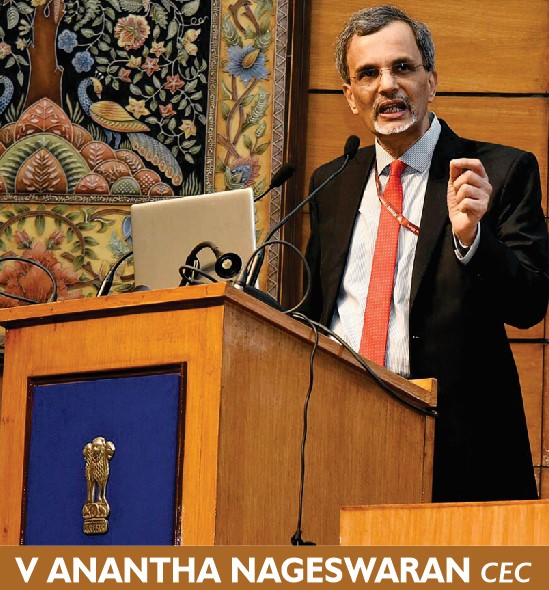
The goods and services tax (GST) breather will soften the US tariff blow to the Indian economy and likely limit the net damage to about 30 basis points of gross domestic product this fiscal, said Chief economic advisor V Anantha Nageswaran
He exhorted large businesses to complete their own share of reforms amid external headwinds and refrain from seeking policy protection just to maintain or raise their own individual market share.
He contended that any protection has to be well-defined, time-bound and must result in enhanced productivity and exports.
GST IMPACT
The reduced GST rates and accompanying process reforms, he reckoned, could lift domestic consumption and reduce reliance on exports while creating conducive conditions for private investments by alleviating uncertainties around demand.
“So, the GST’s contribution is not just the direct impact on people’s purchasing power… More importantly, what it does is to provide an antidote to the second and third round uncertainty effects (of the additional 50% US tariff),” he said.
PROTECTION
Nageswaran argued that large businesses must reflect on the nature of protection that they seek, to avoid raising the cost for smaller entities in downstream industries.
These large companies must focus on expanding the underlying economic pie for all to benefit from by bolstering productivity and innovation.

“Even if one’s market share remains stagnant or goes down but if the pie becomes much larger, the absolute take for everybody will increase, and that is a structural reform that the private sector has to contemplate on,” he said.
Those seeking policy protection also need to show that they have a skin in the game and that they will deliver productivity, quality parameters and innovation, and become global ly competitive, he said.
“Protection, therefore, can’t be in perpetuity,” he added.
REFORMS
Judicious balance between the deployment of technologies, including artificial intelligence, and labour in a demography-rich nation like India is another reform area for the private sector, he added.
He said in the short run, there is a trade-off between the two but if businesses pursue one at the cost of the other over the medium term, the benefits won’t fructify. This is because social stability is an important prerequisite of economic stability.
“And that’s why being very mindful of how soon, how fast and how much we use technology, not to displace labour but to augmentand facilitate labour productivity, is the other most challenging structural reform that the private sector has to keep in mind,” he added.
The CEA said rules and regulations have raised the cost of being honest, prompting many businesses-big or small-to take shortcuts.
“We need to reduce the cost of being honest,” he said, indicating that the reforms efforts from now on would centre around deregulation and catapulting India into the league of developed nations by 2047.
👇 Please Note 👇
Thank you for reading our article!
If you don’t received industries updates, News & our daily articles
please Whatsapp your Wapp No. or V Card on 8278298590, your number will be added in our broadcasting list.


 Hindi
Hindi 

Ply insight launched on March 2018 with a vision to make a platform to collaborate plywood MDF, Laminate, machinery manufactures with dealers in the Trade.
Categories
Useful Links
Follow Us