


GST on Plywood Should Be 5%: Employment Will Rise, Farmers’ Income Will Increase
- September 12, 2025
- 0
The Central Government is working to make the GST system simpler and more rational. For this, there is an emphasis on moving toward two main slabs (5% and 18%). The plywood industry, in particular, has high hopes from this step. The country’s plywood associations demand that GST on plywood should be reduced to 5%. This would not only revive the sector but also create more employment opportunities.
Dr. M.P. Singh, Director General of the Federation of Indian Plywood and Panel Industry (FIPPI), said that the organized-unorganized ratio in India’s plywood and panel sector is 20:80, employing nearly 3.5 million people across the country. The market size of the industry was estimated at around ₹27,000 crore in 2022–23.
With the mandatory Quality Control Order (QCO) on plywood and panel products coming into force from February 2025, high-quality products will be ensured. These rules will reduce import dependency, promote domestic manufacturing, and align the sector with major national initiatives such as Make in India and Atmanirbhar Bharat.
Farmers’ Income Will Increase: Dr. M.P. Singh
About 92% of the wood used in plywood manufacturing comes from Trees Outside Forests (TOF) or agroforestry. More than 1 million farmers are connected with agroforestry. Still, the wood obtained through agroforestry is taxed at 18% GST, which is much higher compared to other agricultural products. Agricultural produce, on the other hand, is exempt from GST, and finished products attract only 5% GST. This mismatch discourages farmers from moving toward agroforestry.
FIPPI’s Arguments
- The Government of India encourages eco-friendly products by keeping GST rates low. For example:
- Natural fibres in textiles are taxed at 0–5%, while man-made fibres attract 18%.
- Electric vehicles are taxed at 5%, while fuel-based vehicles at 28%.
- By contrast, eco-friendly wood panels are taxed at 18%, the same as acrylic, PVC, and wood-plastic composite panels, which are mostly man-made.
- A lower GST rate on plywood would also be an environment-friendly step. Increased green cover will reduce pollution, greenhouse gas emissions, and climate change.
- Reducing GST on wood and wood-based panels from agroforestry will also support the government’s affordable housing targets.
- Lower GST will motivate more businesses to comply and file GST honestly.
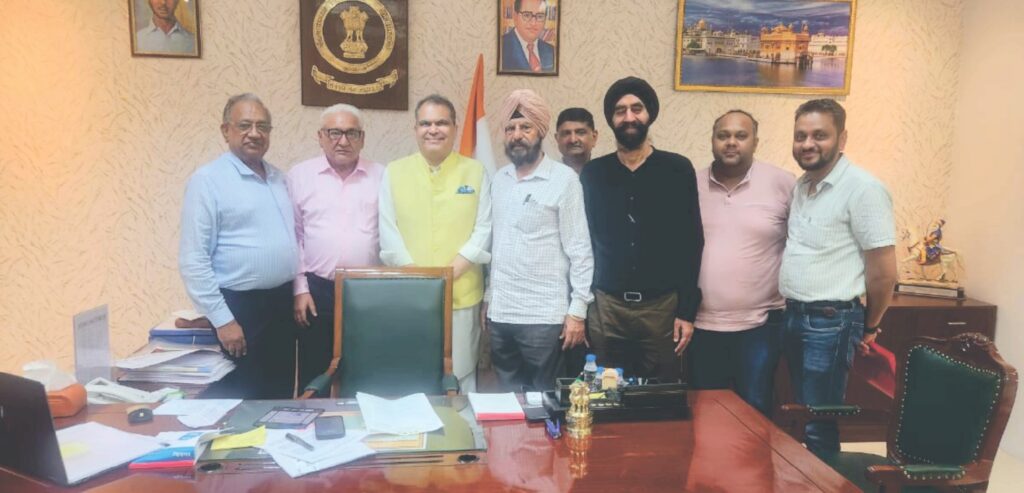
GST Should Be 5%: Sonu Agrawal
Sonu Agrawal, President of Bihar unit of the All India Plywood Manufacturers Association, wrote to Bihar Deputy Chief Minister Samrat Choudhary. He pointed out that Prime Minister Narendra Modi is trying to simplify the GST structure into just two slabs (5% and 18%). He mentioned that while other agro-based products attract only 0–5% GST, plywood is taxed at 18%. He urged the Deputy CM to forward this demand to the GST Council on behalf of the Bihar government.

Employment Will Increase: J.K. Bihani
The Haryana Plywood Manufacturers Association wrote to the Chief Minister requesting him to push for reducing GST on plywood to 5%. They stated that this will encourage the industry, create local employment opportunities, improve raw material availability, and positively impact the state’s economy. With the growth of the plywood sector, the demand for timber will also rise, which will promote plantation drives and increase farmers’ income.
Regional Units Will Strengthen: Ashok Agrawal
Ashok Kumar Agrawal, President of the Uttar Pradesh Plywood Manufacturers Welfare Association, wrote to Finance Minister Nirmala Sitharaman stating that lowering GST will strengthen regional units. He said that more than 3.5 million people are directly employed in this organized and unorganized sector. Implementing a 5% GST rate will increase job opportunities and make home ownership more affordable for common people. It will also create more revenue for the government. This is why the plywood industry is demanding a reduction in GST to 5%.

5% GST on Plywood Will Benefit South Indian Farmers Too: Prashant M.A.
Prashant M.A., President of South India Plywood Manufacturers, said that southern states, especially Karnataka, where Silver Oak and Melia Dubia are grown alongside coffee plantations as part of agroforestry, would greatly benefit if GST on plywood is reduced to 5%. In Kerala too, rubber trees are grown on a large scale, which are directly linked to the plywood industry. Bringing GST on plywood down to 5% will benefit farmers in these regions, boost the plywood industry, and create more employment opportunities at the local level.
Industry Status
Around 3,500 plywood units are currently operational in India, of which 99.5% are MSMEs located in rural and semi urban areas. Raw material is mainly sourced from farmers through agroforestry, which supports their livelihood.
Why GST Should Be Reduced
- Rising production costs are affecting timber consumption and farmers’ wood sales.
- Millions of workers are facing job insecurity.
- Plywood has become expensive for the common people.
Environmental Perspective
The plywood industry directly supports tree plantation and agroforestry, which reduces carbon emissions and provides carbon credit benefits. If the industry weakens, farmers will plant fewer trees, and environmental conservation will be affected. Thus, reducing GST to 5% will not only benefit farmers and industry but also strengthen India’s climate and carbon reduction goals.
Expected Benefits
- Farmers’ income will increase.
- MSMEs will be revived.
- Employment of millions of workers will be secured.
- Common people will get affordable plywood.
- India’s environmental and carbon reduction targets will get a boost.
👇 Please Note 👇
Thank you for reading our article!
If you don’t received industries updates, News & our daily articles
please Whatsapp your Wapp No. or V Card on 8278298590, your number will be added in our broadcasting list.




 Hindi
Hindi 
Ply insight launched on March 2018 with a vision to make a platform to collaborate plywood MDF, Laminate, machinery manufactures with dealers in the Trade.
Categories
Useful Links
Follow Us