

Permit free hand for agroforestry
- March 16, 2026
- 0
Agroforestry has traditionally met our requirements of fuelwood, fodder, and small timber, thereby reducing pressure on natural forests. However, formal recognition of the role of agroforestry in easing forest pressure has come only in recent decades.
We understand that forest areas must be maintained as inviolate zones for the conservation of genetic biodiversity—down to the gene level. Consequently, there is very limited scope for intensive forestry interventions within natural forests. Even scrub forests possess unique biodiversity due to their existence under harsh ecological conditions where tall trees and their associates cannot thrive.
All forests, if closed to disturbance and adequately protected, have the natural capacity to recover over time.
However, what is prohibited in natural forests should undoubtedly be permitted under agroforestry systems. There should be no hesitation in applying fertilizers, manure, or in harvesting timber and other produce, just as we do with agricultural crops. There should be no artificial distinction between cultivating trees and cultivating seasonal crops.
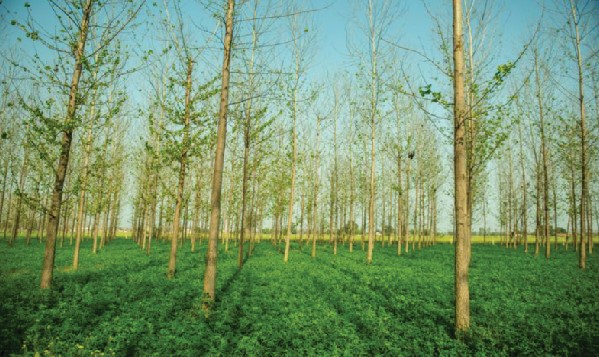
A major bottleneck in promoting agroforestry is the regulatory framework: planting trees is permitted, but when it comes to harvesting—even for exotic species such as Eucalyptus—complex rules come into play.
Recently, I came across a case in a state where Eucalyptus was planted more than 21 years ago by the Forest Department on the land of an organization. The agreement clearly stated that:
- The plantation would be raised and maintained by the Forest Department.
- The cost would be borne by the Forest Department.
- At the time of harvest, revenue would be shared in a 50:50 ratio.
Now, after nearly three rotations, the institution wishes to harvest the trees but is facing considerable difficulty in obtaining permission—even though Eucalyptus is an exotic species grown essentially like an agricultural crop.
What an irony!
Unless we provide a freer and more rational policy environment for tree farming under agroforestry systems, agroforestry will never achieve its full potential.
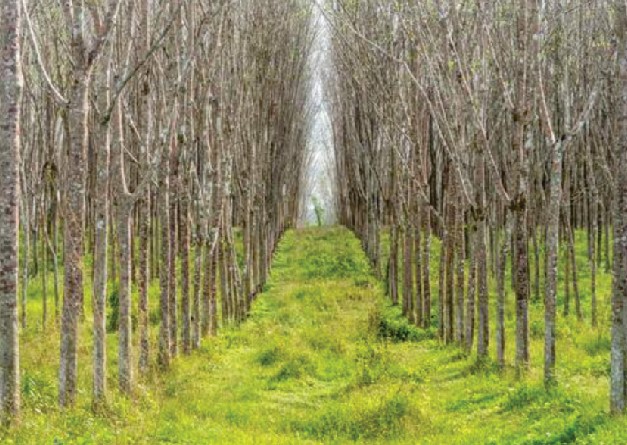 Even minor inspections often take months, causing avoidable harassment to farmers and growers.
As a thumb rule, all exotic species should be freed from restrictions related to felling and transportation. Bamboos too can be put in that category. In the case of some indigenous species, greater caution is warranted. Fast-growing native species suitable for agroforestry should be identified, and restrictions on their felling and transport should be minimized. However, we must proceed carefully in certain cases.
Undoubtedly, Semal is an excellent species for matchwood and was once the first choice of WIMCO. It is an excellent species for supporting slates for house construction as semal wood has an excellent nail holding capacity. However, declining availability likely compelled industries to shift toward Poplar, which is widely cultivated under agroforestry systems.
On private lands, most existing Semal trees are of natural origin. The Forest Department has almost abandoned the species without valid ecological justification. Therefore, baseline data and species health status must be carefully evaluated before advocating deregulation of any particular species.
There is essentially no difference in tree farming, whether it is undertaken by industries or by the Forest Department. The real question is: where should forest laws apply, and where should they end?
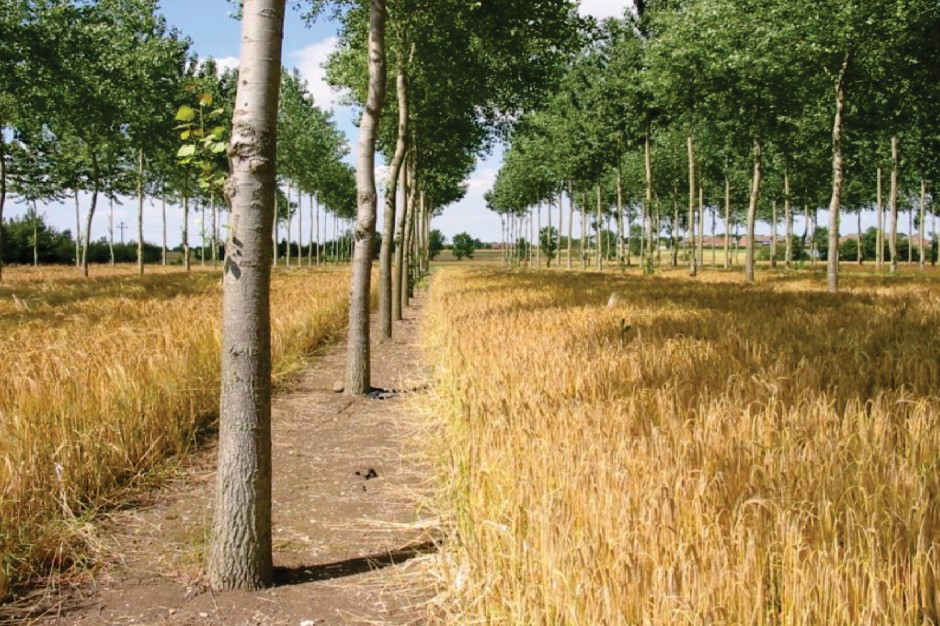 In my view, as far as farmers are concerned, the forest boundary should mark the limit. If restrictions are imposed on farmers’ fields, they will hesitate even to allow a small seedling to grow. However, in the absence of restrictive regulations, farmers may willingly retain and nurture trees on their lands.
That said, it would not be appropriate to suggest that forest laws should end strictly at the legal forest boundary. Certain categories of non-forest lands also require some level of protection.
For example, the Vanies in Haryana and the Biharhs in Punjab. A “Vani” traditionally meant a village forest. Almost every village in Haryana and Punjab once had its own luxuriant forest patch. Unfortunately, in most cases, these lands have either been converted into agricultural fields for revenue generation or have deteriorated significantly.

These village forests supported unique indigenous flora and considerable genetic diversity. Interestingly, some species found in these lands do not occur in notified forest areas. Salvadora is one example, and Capparis decidua is another.
As regards ownership, there should be no ambiguity: trees growing on farmers’ lands should belong to the farmers, unless they are part of a clearly defined contractual arrangement. Even contract-based high-value crop arrangements should be approached cautiously. Exotic or indigenous should not be an issue.
However, I have emphasized the need to protect common lands and panchayat lands. We need long-living “nature’s factories” that continuously produce life-giving oxygen. We need as many green lungs as possible.
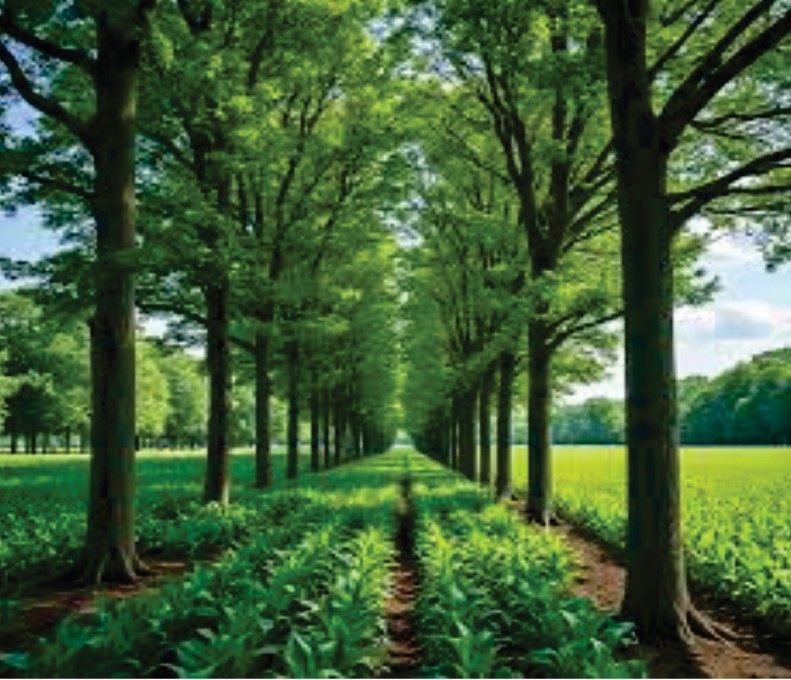 Of course, a few individuals may prefer to convert such lands into commercial crop fields. However, not only I, but everyone should agree on one fundamental principle: these small biodiversity hotspots must not be converted into sites for water-guzzling, soil-degrading commercial crops. Transforming such ecologically valuable patches into intensive agricultural fields would weaken local ecosystems and erode the natural capital that sustains long-term community well-being.
That is why I have emphasized the involvement of communities in protecting common lands. The best approach is to strive for “social fencing” — protection ensured through collective community responsibility.
I also fully understand the genuine concerns of industries. On several occasions in Haryana, we took up the issue of treating their wood-based products as agricultural produce and exempting them from certain taxes. Although those efforts did not materialize, the intent was clear.
All officers, farmers and industrialists in Haryana and Punjab are well aware of the prosperity that can come to farmers—and to the state—when unnecessary restrictions are avoided. Despite having only a little over three percent forest area, Haryana and Punjab together have become undisputed leaders in agroforestry.
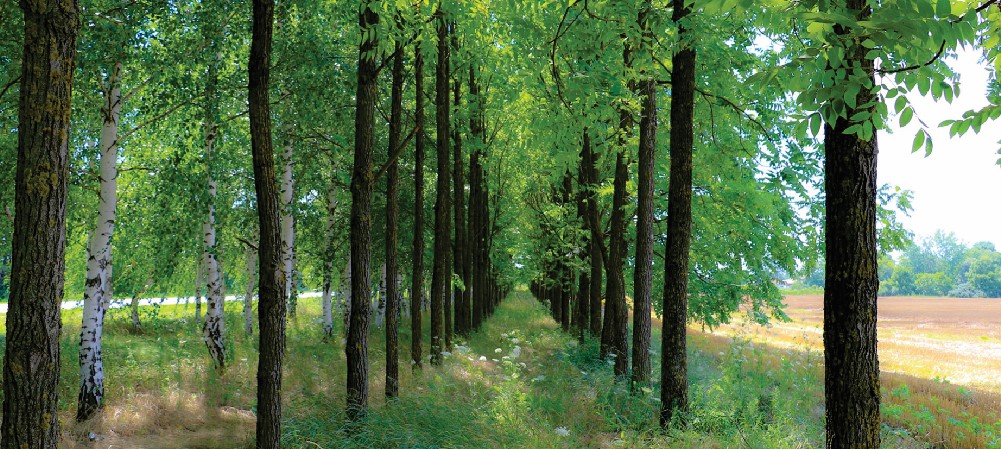
The forest departments in both states treat farm-grown wood as an agricultural crop and do not interfere. Farmers, having been given a free hand, have become innovators and leaders. In fact, we now visit their farms to learn from their new ideas and practices.
Let us recall that the T.N. Godavarman Thirumulpad judgment was delivered by the Hon’ble Supreme Court of India in 1996. In the aftermath of that landmark decision, a large number of wood-based industries shifted from the North-Eastern region to Yamunanagar. I must congratulate the wood industries for their enterprise and resilience. Through sustained hard work, Yamunanagar has earned national recognition by producing nearly fifty percent of the country’s plywood, rightly earning the title “Plywood Capital of India.” This achievement has placed Yamunanagar prominently on the national and even international map.
At present, a healthy symbiosis exists among wood-based industries, farmers, and the Forest Department. The Department regularly facilitates dialogue between industries and farmers to bridge any gaps and address emerging concerns. While industries are encouraged to remain sensitive to farmers’ interests, farmers are likewise advised to align their production with industry requirements.
Some minor operational issues do persist. For instance, industries generally prefer procuring wood through intermediaries, and farmers, too, appear comfortable with this arrangement. Industries often require time to process procurement and release payments, whereas middlemen are able to provide immediate payment to farmers and subsequently wait for settlement from the industries. In practical terms, this functions as a mutually beneficial arrangement—a win-win situation for all stakeholders.
As rightly said, “Together Everyone Achieves More.”
👇 Please Note 👇
Thank you for reading our article!
If you don’t received industries updates, News & our daily articles
please Whatsapp your Wapp No. or V Card on 8278298590, your number will be added in our broadcasting list.



 Hindi
Hindi 
Ply insight launched on March 2018 with a vision to make a platform to collaborate plywood MDF, Laminate, machinery manufactures with dealers in the Trade.
Categories
Useful Links
Follow Us