

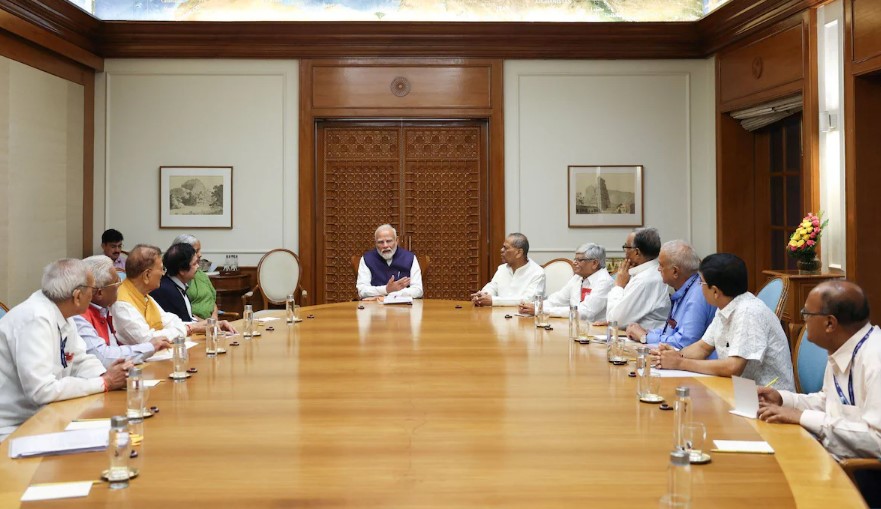
PMO directs ministries to Push Reform Plans amid Gulf Crisis
- April 1, 2026
- 0
The Indian government is preparing a comprehensive reform roadmap in response to the West Asia (Gulf) crisis, aiming to strengthen the economy and reduce external vulnerabilities. The Prime Minister’s Office (PMO) has directed ministries to submit actionable reform plans, focusing on quick wins and practical measures. A “whole-of-government” approach is being adopted to ensure coordinated action across sectors.
Key priority areas include: self-reliance, strengthening domestic supply chains, and reducing dependence on global disruptions—similar to strategies used during the COVID-19 pandemic.
Economic Focus: The Department of Economic Affairs is analyzing the impact on energy supply, costs, and overall economic stability. Other finance ministry departments are also working on sector-specific strategies.
Reform Strategy: Plans will cover short-, medium-, and long-term reforms, reviewed at senior government levels. Existing reform initiatives (like Viksit Bharat goals and deregulation efforts) are being accelerated.

Impact of the Crisis: The conflict has disrupted global supply chains, especially energy, increasing urgency for reforms. Immediate focus is on ensuring energy and fertiliser availability, while minimizing the impact on households and businesses.
Economic Risks: India’s projected 7–7.4% growth (2026–27) faces downside risks due to the crisis. Concerns include inflation, fiscal deficit, and external balance pressures if the conflict continues.
Conclusion: The government aims to use the crisis as an opportunity to accelerate reforms, boost resilience, and strengthen domestic capabilities, while continuing long-term economic development plans.
👇 Please Note 👇
Thank you for reading our article!
If you don’t received industries updates, News & our daily articles
please Whatsapp your Wapp No. or V Card on 8278298590, your number will be added in our broadcasting list.


 Hindi
Hindi 
Ply insight launched on March 2018 with a vision to make a platform to collaborate plywood MDF, Laminate, machinery manufactures with dealers in the Trade.
Categories
Useful Links
Follow Us