


AI-Based Visual Inspection Technology Enters Plywood Production
- August 10, 2026
- 0
Latin America’s largest plywood manufacturer, Arauco, has decided to install Finland-based Raute’s “advanced” Visual Analyzer R7 system on the repair lines of its two plywood plants in Chile. The AI-powered technology will inspect every plywood panel using high-resolution cameras and 3D scanning, determining which panels require repair and the extent of corrective action needed.
The combined production capacity of both plants is approximately 800,000 cubic metres (800,000 m³) of plywood annually. In June 2026, Raute confirmed that the Visual Analyzer R7 systems would be installed on the panel repair lines of both facilities. The system will identify surface defects in plywood panels and assess their severity, making the repair process faster, more accurate, and cost-effective.
A New Chapter of AI in the Plywood Industry
Until now, the use of Artificial Intelligence (AI) in the wood industry was mainly limited to applications such as forest inventory, tree counting, and identifying diseases and pests. However, Arauco’s adoption of this technology is bringing AI directly into the core of plywood manufacturing processes.
According to Jorge Sánchez, Operations Manager at Arauco, the company’s objective is to improve the efficiency of the panel repair process. He explained that the AI system will perform a 3D scan of each panel and analyse defects, enabling repairs to be carried out only where required and reducing material wastage.
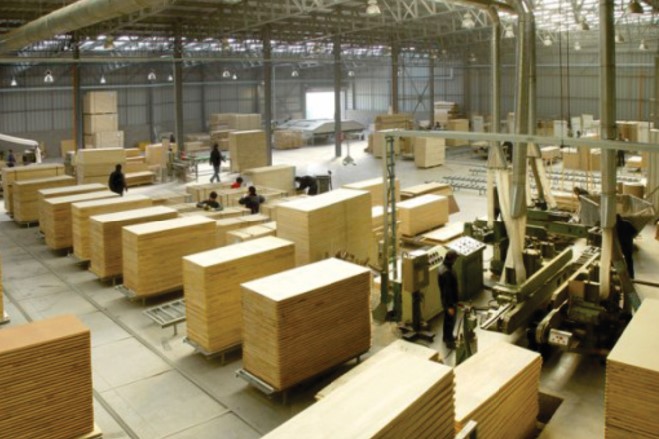
Up to 50% Reduction in Repair Material Consumption
According to Raute, the Visual Analyzer R7 system can reduce the consumption of repair materials by up to 50 percent. The company also stated that its deep learning-based AI technology is already being successfully used in commercial veneer, plywood, and LVL mills.
Over the past 50 years, Raute has developed grading technologies based on more than 50 wood species. The technology creates an individual defect map for each veneer sheet, allowing more efficient control of grading, clipping, and material flow. It also helps remove defective veneer before it reaches the dryer and hot press stages.
Early Defect Detection Improves Production Efficiency
One of the biggest advantages of AI-based inspection systems is the ability to detect defects at an early stage of production.
Identifying and removing defective veneer before further processing helps save energy, time, and raw materials while improving overall manufacturing efficiency.
According to Markus Kärki, Senior Director at Raute, detecting defects at the beginning of the production process can significantly reduce downstream costs. He highlighted that as plywood manufacturers increasingly use a wider variety of wood species, accurate early-stage inspection has become more important than ever.
The Future of the Plywood Industry
Technologies such as AI, machine vision, and deep learning are transforming quality control and production efficiency in the plywood industry. The initiative by Arauco and Raute demonstrates that smart factories and automated quality inspection systems are set to become an essential part of the future of wood-based industries.
Courtesy : Wood central



 Hindi
Hindi 
Ply insight launched on March 2018 with a vision to make a platform to collaborate plywood MDF, Laminate, machinery manufactures with dealers in the Trade.
Categories
Useful Links
Follow Us