

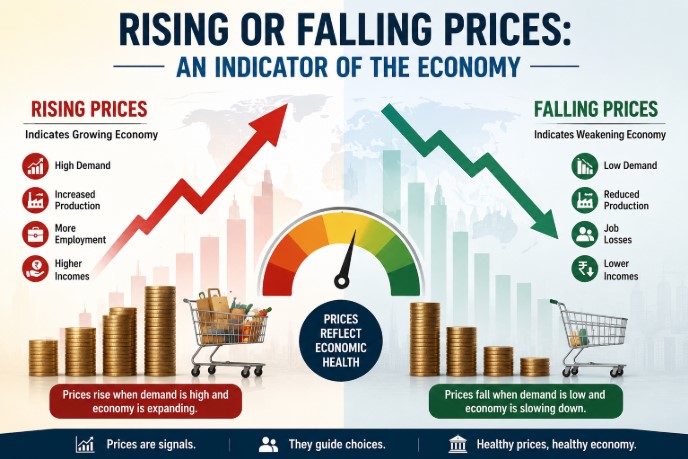
Rising or falling prices: an indicator of the economy
- August 10, 2026
- 0
When an economy faces a shock such as a war or a pandemic, it can generally adjust in one of two ways: either through prices or through administrative controls imposed by the state. Market economies primarily rely on prices, while centrally planned systems depend on bureaucratic allocation.
The current turmoil in global energy markets demonstrates why this distinction matters.
First, prices perform two important functions: they provide information and create incentives. Prices convert the decisions of millions of consumers, businesses, traders, and investors into a single signal that indicates whether a product is scarce or abundant.
When fuel becomes more expensive, people tend to drive less, postpone unnecessary travel, or switch to public transportation. Businesses reduce non-essential energy consumption or seek alternatives.
Producers, on the other hand, receive the opposite signal: higher prices encourage them to increase supply, redirect products to areas experiencing shortages, or develop substitute solutions.
Prices solve these problems more effectively because people can adjust their behavior on their own as circumstances change. This preserves economic freedom and ensures that decisions about what to consume, conserve, or prioritize are made by those directly affected rather than by government authorities operating with limited information.
Second, government intervention often produces unintended consequences. Export bans on agricultural products may lower crop prices. Restrictions on gold imports can create shortages and encourage black-market activities and smuggling.
Artificially suppressing prices may seem beneficial in the short term, but the costs eventually emerge elsewhere, often increasing the burden on taxpayers.
Finally, frequent state intervention creates uncertainty because people stop responding to market signals and instead focus on predicting what actions the government may take next. Many businesses postpone investment decisions because they are unsure what new controls or restrictions may be introduced. This reduces confidence in the broader policy environment.
Prices are not the problem; rather, they help economies absorb and adapt to shocks. The role of policymakers is not to suppress these signals but to allow prices to function effectively while providing targeted support to those who are most vulnerable.

 Hindi
Hindi 
Ply insight launched on March 2018 with a vision to make a platform to collaborate plywood MDF, Laminate, machinery manufactures with dealers in the Trade.
Categories
Useful Links
Follow Us