


New Forest Land Lease Policy – South Indian Scenerio
- March 20, 2026
- 0
Sh. RK Sapra, 1982 Batch- IFS (Retd.) Ex. PCCF, Haryana & Ex. MD Haryana Forest Development Corporation
For 30 years, the Indian Paper Manufacturers (IPM) tried to get forest land on lease to grow raw material, but the government did not agree. Finally, a solution was found: the land will stay with the Forest Department, they will protect it, and industries will invest. Whatever is produced will be shared between government and industry.
This policy is similar to how the National Highway policy developed. At first there were difficulties, but later it became successful. In forestry too, there will be two parties:
- Forest Department (provides land and protection)
- Industry (invests money and shares produce as per agreement)
Sh. A K Goyal, 1981 Batch, IFS, (Retd.) Special Secretary, Govt. of India, Kerala
Such projects can damage natural forests if not managed properly. Only degraded forest areas should be given for plantations, since the Forest Department could not raise them earlier. If private agencies raise plantations there, it is good. But strict monitoring is needed so that agencies don’t misuse the land.
Dr. V. Irulundi, 1982 Batch- Ex- PCCF, IFS (Retd.) Tamil Nadu
This policy is a good move to improve degraded forests. India claims 23-24% forest cover, but surveys say only 15% is truly dense forest. Many areas need regeneration.
Species choice will depend on state needs and local communities. Protection cannot be done by the Forest Department alone; local people must be involved. Joint forest management is important.
In Tamil Nadu, pulp plantations for paper mills like TNPL faced protests. Farmers complained about water use and opposed eucalyptus expansion.
Dr. K N Murthy, 1985 Batch Ex-PCCF – Karnataka
In Karnataka:
- Melia Dubia is popular for plywood.
- Eucalyptus is used for pulpwood.
- Silver Oak is grown in coffee estates.
- Teak is grown but hard to sell.
Eucalyptus plantations are declining. Government nurseries don’t supply seedlings, so only private nurseries do. In 10-15 years, Eucalyptus may almost disappear from farmers’ land. Silver Oak is available but hard to harvest in coffee estates because damaging a coffee plant costs ₹2000.
About the new policy: industries have wanted degraded forest land for decades. Past experiments failed. Current policy is a step forward but faces challenges:
- Land may be too degraded for good growth.
- Industries may hesitate to invest.
- Forest Department control makes it hard for outsiders.
- Local communities may oppose monoculture plantations.
Medicinal plants may be a better option. They grow faster (2-3 years), need less land, and don’t harm native vegetation. Ayurvedic industries are interested, so this policy may suit them better.
Karnataka is preparing micro plans for degraded forest areas, funded by mining money (₹2500 crores). These detailed project reports (DPRs) could be used for pilot projects. But political differences between the state and central government may slow implementation.

Response by Sapra to Dr. K N Murthy
Medicinal plants are promising. They don’t need large fertile land, and industries can benefit quickly. Growing them in forest land avoids problems seen in farmland.
Dr. M.P. Singh, 1990 Batch- Director-General (FIPPI) Federation of Indian Plywood & Panel Industry
This new policy is positive, but in India, policies take time to become reality. For example, the 1988 policy took years and required the Godavarman judgment to be enforced. Now, industries source raw material from agro-forestry. This new policy gives a chance to grow raw material again in forest land. But challenges remain:
- Biodiversity concerns
- Short vs. long rotation crops
- Exotic vs. native species
- Local community interests
- Farmers’ fear that large forest plantations will reduce timber prices
Industries may not use forest land for short rotation crops (4-5 years), since farmers already supply those. But for long rotation crops (like face veneer species), collaboration with government could work.

The main issue is finding a state government willing to implement this policy. States and the central government often work at different speeds. Industries are approaching Andhra Pradesh, Telangana, and some southern states to see who will move first.
Sh. Suneel Pandey, IFS 1990 – Batch, Vice President, ITC Limited – PSPD
About the new Government of India order:
- This policy took nearly 18 years of effort.
- Earlier experiments like Mysore Paper Mill showed that private industries cannot protect forest land alone.
- That’s why the new model is not a lease but a collaboration: land stays with the Forest Department, industry invests, and produce is shared.
- Conservation areas were included along with plantations. This inspired India’s current guideline, which requires Detailed Project Reports (DPRs) and conservation planning.
Key points of the guideline:
- India already has 1.2 million hectares of plantations managed by Forest Development Corporations (FDCs).
- Now, plantations will be industry-linked, with investment from industry and collaboration with the Forest Department.
- Species will vary not only Eucalyptus but also Garjan, Casuarina, bamboo, etc.
- The aim is to reduce dependence on imports and stabilize wood prices.
Cost comparison:
- In India, wood costs about USD 200 per BDMt (bone dry metric ton).
- In Indonesia, Malaysia, and Brazil, wood costs only USD 100 per BDMt because industries there use leased forest land.
- Indian plywood peeling logs cost about 15,000 per metric ton, and imports of veneer and peeling logs rose by 80% last year.
- The goal is to source at least 10-15% of industrial wood from forest plantations to reduce costs and avoid crises.

Environment and community concerns:
- Plantations will not degrade forests if managed properly.
- Biodiversity conservation will be part of DPRs.
- Plantations generate high employment – about 450 man-days per hectare from nursery to harvest.
- Local communities can benefit through fuelwood, fodder, and jobs.
- This policy can save foreign exchange, reduce imports, and improve forest cover.
This is a long journey, but it can be a win-win for forests, communities, and industry if implemented carefully.
Prof. K.T. Parthiban, Professor (Forestry) & Former Dean – Forest College & Research Institute, Tamil Nadu
Key points:
- The Government of India’s land lease policy is welcome, but conditions must be clearly written.
- Tamil Nadu has used models like contract farming and captive plantations where industries lease land and share benefits.
- Demand for wood is huge: in Tamil Nadu alone, industries need about 200 lakh tons annually, but only 1 lakh ton comes from the Forest Plantation Corporation.
- Industries must use this policy to create captive plantations and secure raw material.
- Lease conditions should include biodiversity protection and soil conservation.
- Industries should dedicate 30-33% of leased land to natural forest cover.
- Multi-species plantations (Melia, Thespesia, Casuarina, etc.) should be promoted instead of monoculture.
- This policy can reduce imports, lower costs, and create rural employment.
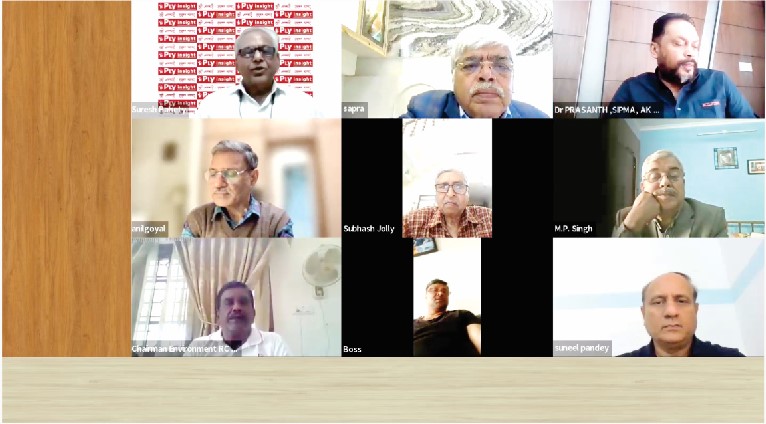
This land lease policy is a welcome step because:
- Industries will get sustainable raw material.
- Forests will be restored.
- Employment will be created in rural areas.
- Industries can benefit from green credit programs and certifications like FSC.
If industries invest in raw material, India can achieve security in wood supply and become globally competitive.

Sh. Mahesh Shirur, 1993 Batch, IFS, PCCF, FC – Bangalore
Earlier, the Government of India tried to give degraded forest land to industries, but the Supreme Court stopped it. Now, the new policy has been introduced again. We must carefully define:
- What land will be given.
- What species can be planted.
- Revenue sharing rules.
- Which areas are “no-go.”
Environmentalists may oppose this, so clear answers are needed.
As MD of Karnataka Forest Development Corporation (KFDC), I manage 40,000 hectares of pulpwood plantations. For seven years, we harvested only old Eucalyptus coppice crops because new planting was banned. Other species like Casuarina and Acacia were tried but did not give good income. Eucalyptus still provides the best returns.
Industries must do more research to find alternative pulpwood species. Also, when industries use forest land, they should support nearby villages with socio-economic activities. Otherwise, people will resent industries taking profits without helping locals.
Dr Omprakash Madguni, Retd. Faculty Member – Indian Institute of Forest Management
In 2015, IIFM was asked to revisit the National Forest Policy. We discussed how to increase investment and productivity in forestry.
From my experience in Karnataka’s Western Ghats:
- Plantations like Acacia and Casuarina improved groundwater initially, but later reduced water levels and increased salinity.
- Fodder and herbs disappeared due to dense plantations.
- Visual green cover improved, but biodiversity suffered.
Community-led restoration projects converted degraded land into mixed forests, which provided ecosystem services and products.
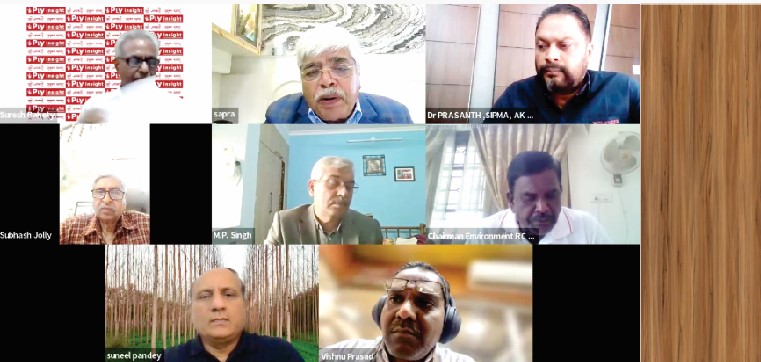
Recommendations:
- Define forestry activity clearly so plantations are not treated as non-forestry.
- Strengthen working plans to include ecological restoration and commercial scope.
- Protect riparian zones, grasslands, and biodiversity.
- Consult local communities and panchayats before implementation.
- Develop monitoring frameworks to measure ecosystem services and community benefits.
Dr. Prashanth MK, President – South Indian Ply Mfg. Association (SIPMA) Director – AK Apple Ply, Mangalore
India has committed to net zero emissions by 2070. At the same time, we face timber shortages and rely on imports, which cost foreign exchange and increase carbon footprint.
The new amendment to para 7.2 is welcome because it exempts industries from compensatory afforestation and net present value (NPV) payments.

Industries should:
- Work with PCCFs in each state.
- Ensure projects are treated as forestry activities.
- Submit DPRs and follow approved working plans.
- Keep projects under Forest Department supervision.
This should be seen as assisted natural regeneration and sustainable plantation programs, not just land leasing. It will help industries secure raw material, reduce imports, and support India’s climate goals.
Sh. Vishnu Prasad, Director – Krishna Plywood Group, Tamil Nadu
This policy is good, but the modality (the way it is implemented) must be clear so that it benefits both industry and government.
- Right now, we import raw material, which costs foreign exchange and affects carbon credits.
- With this policy, we can get raw material locally and even enter the international market.
- At present, farmers plant only pulpwood species because they are confident in them, but not species suitable for plywood. This policy can solve that problem.
- It will also support the government’s 150 days employment policy, as industries can provide work directly.
- Certification for exports will also become easier.
If the modalities are set properly, this can be a fantastic model that benefits industry, government, and local people.

Sh. Vaidyanathan Hariharan, Secretary Wood Technologist Association Director KRDF, Ernakulam
- What yield can we expect from degraded forest land? Even if it is only 30-35% of normal yield, will it still be economical for industries?
- Can different species grow well in degraded forest land?
- Industry, state forest departments (SFD), and PCCFs must sit together to discuss feasibility.
Another issue: working plans. If a plan says harvesting should be done in the 9th or 10th year, but industry needs wood earlier (say in the 6th or 7th year), how will this be managed? Flexibility is needed to match industry requirements with working plans.
Dr. A. Nicodemus, Scientist ‘D’ – IFGTB, Coimbatore
Key points:
- This new policy will face both support and opposition. Some will say plantations are bad or compare them to mining.
- Success will depend on how we use this opportunity over the next 10 years.
- Strong R&D inputs are needed. Improved varieties developed by industry and research have already made a big impact.
- In farm forestry, farmers decide quickly if something is profitable. But in forest land, there will be many regulations and conditions.
- Therefore, close cooperation is needed between research institutions, industry, and the Forest Department.
- This policy is a great opportunity to improve productivity, involve all stakeholders, and contribute to nation building.

Sh. B.R. Narayanswami, Farmer – Coimbatore
Farmers want profit from their land, usually through agro-forestry. But land available for industrial wood and paper wood is shrinking. In Tamil Nadu, only 25% of agriculture land remains.
Therefore, forest land should be given to private sector with involvement of farmers, communities, and research institutions. This will help meet demand, reduce imports, and support economic development.
Sh. Avdhesh Yadav, Vice President – Wood Technologist Association
The new Forest Land Lease Policy promotes collaborative plantations on degraded forest land. Ownership stays with the Forest Department, but industries or private groups can plant under supervision.
Key points:
- This amendment was notified on 29 November 2023 and approved on 2 January 2026.
- Under the new rules, tree plantations done under the supervision of state forest departments, with approved management plans and consent of state governments, will be treated as forestry activity.
- This means industries will not have to pay compensatory afforestation or Net Present Value (NPV) charges.
- States can decide case by case about leases and revenue sharing.
- Permission for plantations must be based on Detailed Project Reports (DPRs), which should include area, species, activities, and sustainable harvest levels.

Sh. A K Goyal, 1981 Batch, IFS, (Retd.) Special Secretary, Govt. of India, Kerala
I agree with the policy but stress caution. Implementation is the key.
- Biodiversity must not be harmed.
- Highly degraded land may not attract private investment because growth will be poor.
- Production forestry should be done only in designated plantation working circles (about 2 million hectares available).
- Conservation should remain the focus in other areas.
- Monitoring is essential, otherwise conditions are ignored.
Discussion on Production vs. Conservation Forestry
After the Godavarman case, many plantation working circles were converted into improvement working circles, and production forestry was largely stopped. For the last 30 years, focus has been only on conservation, while production forestry has been neglected.
Some points raised:
- 10% of forest area is supposed to be under production forestry as per the working plan code (2014, updated in 2023). The rest is for biodiversity and conservation.
- If production forestry is allowed, it should be clearly separated from conservation areas.
- Money shortage is a big problem. Even when working plans prescribe actions, they are not followed because of lack of funds.
- In Haryana, working plans are often treated as “felling programs” only, without proper prescriptions.
Sh. A K Goyal, 1981 Batch, IFS, (Retd.) Special Secretary, Govt. of India, Kerala
He stressed that implementation is the key. Forestry operations must not destroy adjoining areas. For example, in selection felling, one mature tree is taken but many smaller trees are damaged in the process. This should not happen.
Debate among Panelists
- Production forestry areas are meant only for production, not conservation.
- Even reaching plantation areas (building roads, cutting access paths) can damage conservation forests nearby.
- Kerala’s eco-restoration program was mentioned, where Eucalyptus was uprooted to bring back native species. This shows the challenge of balancing productivity with conservation.
- Many agreed that clear national guidelines are needed. Otherwise, each state will implement differently, which may cause confusion.
- Examples from Malaysia and Vietnam were cited, where forest land was given to favored industries, often without strict conditions.
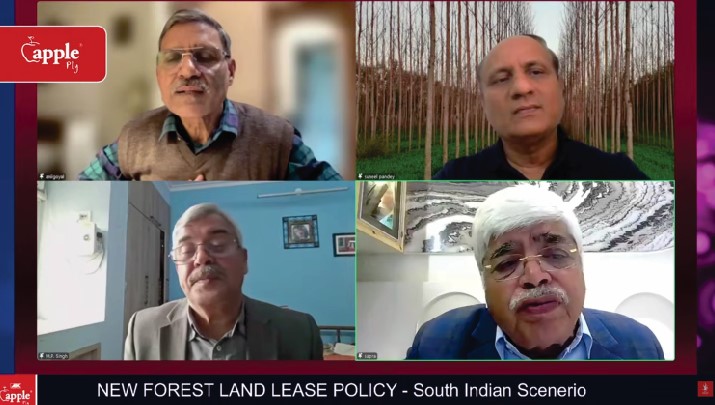
Concerns Raised
- Monitoring is weak. Even conditions under the Forest Conservation Act are not properly checked.
- Without monitoring, problems will continue.
- Many forest officers are still against this policy change. More than 50% of IFS officers reportedly do not support
Closing Remarks
- India must decide: either produce wood locally or keep importing.
- Agro-forestry potential has not been fully used yet.
- The new policy is an enabling provision, but it will fail if not implemented with detailed guidelines and strong monitoring.
👇 Please Note 👇
Thank you for reading our article!
If you don’t received industries updates, News & our daily articles
please Whatsapp your Wapp No. or V Card on 8278298590, your number will be added in our broadcasting list.



 Hindi
Hindi 
Ply insight launched on March 2018 with a vision to make a platform to collaborate plywood MDF, Laminate, machinery manufactures with dealers in the Trade.
Categories
Useful Links
Follow Us