

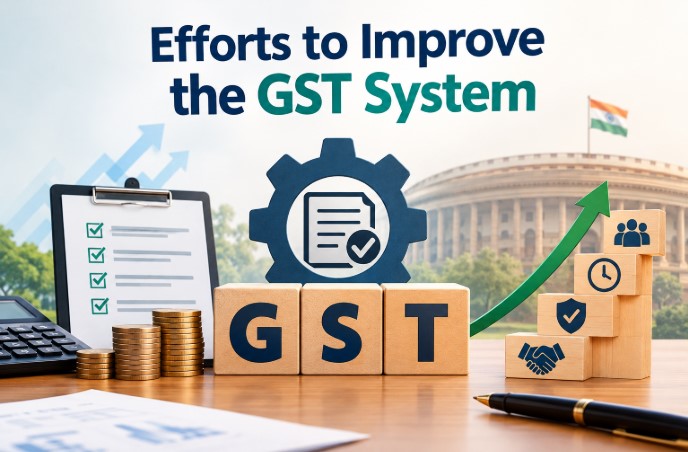
Efforts to improve the GST system
- October 9, 2026
- 0
At a meeting chaired by Union Finance Minister Nirmala Sitharaman on 8 August, the GST Council sought to address the long-standing concerns of bona fide buyers regarding Input Tax Credit (ITC).
A committee of officers will examine how to protect genuine buyers who possess valid invoices, have received the goods and have made full payment to their suppliers. However, if the supplier defaults on the GST payment, the buyer is deprived of the benefit of the said ITC.
Sitharaman questioned why an honest taxpayer should face difficulties or have to wait until every participant in the supply chain achieves full compliance. She said the government had proposed limiting a buyer’s responsibility to the immediate supplier. However, some states called for the matter to be examined by a committee of officers.
The committee will submit its recommendations within three months, following which the issue will return to the GST Council at its next meeting for consideration. The proposed measures are targeted for implementation from April 1, 2027.
Key Recommendations of the GST Council
- Removal of Arrest Provisions under GST: The Council has recommended removing Section 69, which provides the legal basis for arrest under the GST framework.

Impact: The move is intended to reduce the threat of arrest as a tax-recovery measure and establish a clearer distinction between tax recovery proceedings and criminal action.
- Prosecution Threshold under GST to Be Raised Fivefold: The monetary threshold for prosecution under GST will be increased from ₹1 crore to ₹5 crore.
Impact: Criminal prosecution will be focused on more serious cases involving fraud and tax evasion, reducing the burden of litigation in comparatively lower-value cases.
- Monetary Threshold for Show-Cause Notices: No show-cause notice under GST will be issued where the total tax liability is less than ₹10,000.
Impact: This measure is expected to reduce disputes and litigation involving small amounts, allowing tax authorities to focus on more significant cases.
- Reduction in the Maximum General Penalty: The maximum general penalty under Section 125 will be reduced from ₹25,000 to ₹10,000.
Impact: The move will lower the cost of procedural violations and is intended to encourage better compliance.
- Definition of Export of Services: Certain overseas business activities of Indian companies will be treated as exports, subject to specified conditions.
Impact: The proposed change is expected to provide greater clarity and improve tax treatment for Indian companies operating in foreign markets.
👇 Please Note 👇
Thank you for reading our article!
If you don’t received industries updates, News & our daily articles
please Whatsapp your Wapp No. or V Card on 8278298590, your number will be added in our broadcasting list.
Join our WhatsApp Channel “Ply & Panel Ind. News”


 Hindi
Hindi 
Ply insight launched on March 2018 with a vision to make a platform to collaborate plywood MDF, Laminate, machinery manufactures with dealers in the Trade.
Categories
Useful Links
Follow Us