

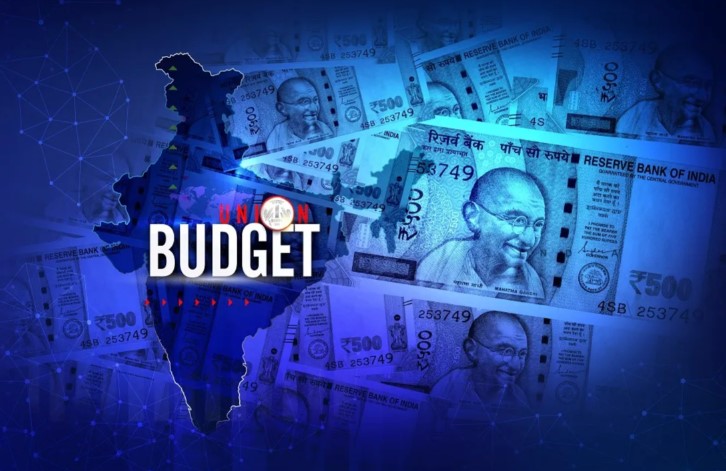
The Budget meets industry expectations
- February 4, 2026
- 0
In the pre-Budget discussion, the expectations of the industry revolved around multiple agenda items, out of which it appears that the following have been touched upon:
- A boost to domestic manufacturing with a focus on reducing production costs, and increasing global competitiveness
- Automation of compliances/processes to reduce human intervention
- Provide certainty on trade practices and reduce litigation
- Correct inversions in the duty rate to reduce working capital
- Promote ease of doing business and develop a trust-based system
The government, via the Union Budget, has announced various reforms in the direction to achieve India’s ambition to sustain a 7 per cent growth trajectory. Under indirect tax, the reforms have been focused on simplifying the tariff structure, supporting domestic manufacturing, promoting export competitiveness and correcting inversions in duty. With a special focus on strategic sectors such as renewable energy, critical minerals, defence, nuclear power, textiles and electronics.
Further, continuing the earlier ambition of “Viksit Bharat” and “ease of doing business”, reliance is placed on the use of technology to automate Customs processes and have minimal intervention for smoother and faster movement of goods and use Al technology for risk assessment activities.
Overall, the Budget appears to have met many industry expectations
GST Framework
The Finance Bill, 2026 proposes important changes to India’s goods and services tax (GST) framework.
GST relief for post-sale discount (i.e. discount given after the sale) has been granted. GST is charged on the supplies made, but if post supply a discount is given, typically it would lead to excess tax paid on the said transaction. Normally, the supplier would issue a credit note to the buyer and thereby reduce its GST liability. But there was a need to have a pre-agreed discount in writing and supported by robust documentation. In the proposed Finance Bill, the said requirement has been done away as long as a credit note is issued by the supplier and input tax credit has been reversed by the buyer.
Many industry players such as textiles, pharma, fast-moving consumer goods (FMCG) are facing working capital blockage, where GST paid on purchases is more than the GST paid on sales – a situation known as inverted duty structure. Although the GST law allows taxpayers to claim refunds of accumulated differential, the refund process often takes considerable time and effort. To fast track such refunds and reduce working capital blockage, it has been proposed to grant 90 per cent of the refund amount as provisional refund.

The global concept in international trade is not to export taxes. Meaning, exports should be tax free. So typically, for an Indian exporter of services, GST would not have been levied on their supplies to overseas customers. However, an exception was carved out in case the Indian entity qualified as an “intermediary”, which was defined to mean a person who arranges or facilitates supply of goods and services. There have been a large number of disputes on the determination of an “intermediary”. The good news is that this Budget proposes to remove the concept of intermediary.
This would mean that the general rule of interpretation applies to decide the exporter criteria. Accordingly, if the customer is outside India, the place of supply will be treated as outside India, making it easier to treat such services as exports and claim refunds.
However, one has to be mindful that in case of a reverse situation, i.e., if the customer is in India, then the transaction will qualify as imports and accordingly tax is payable in India.
Customs and excise reforms
From April 1, 2026, all personal imports will attract a single Customs duty rate of 10 per cent, replacing the previous slabs system of 10 per cent and 20 per cent. This change simplifies the process for individuals importing goods for personal use.
A new class of importers, termed Eligible Manufacturer Importers, has been introduced and permitted to avail the deferred payment of import duty facility up to March 31, 2028. This measure is expected to encourage these importers to seek accreditation as full-fledged Tier-III AEOs in due course, further integrating them into the trusted trader Ease of doing business has been brought in the area of Customs clearance. For goods not needing compliance
Approvals from various agencies will be processed through a single digital window, making the process faster and more predictable.
A new Customs Integrated System is set to be rolled out in two years which will unify all Customs processes, reducing paperwork.
In addition, the use of non-intrusive scanning technologies, advanced imaging, and artificial intelligence will be expanded with the goal of scanning every container at major ports. This will enhance security, reduce the need for physical inspections, and expedite the movement of goods through ports.
👇 Please Note 👇
Thank you for reading our article!
If you don’t received industries updates, News & our daily articles
please Whatsapp your Wapp No. or V Card on 8278298590, your number will be added in our broadcasting list.




 Hindi
Hindi 
Ply insight launched on March 2018 with a vision to make a platform to collaborate plywood MDF, Laminate, machinery manufactures with dealers in the Trade.
Categories
Useful Links
Follow Us