

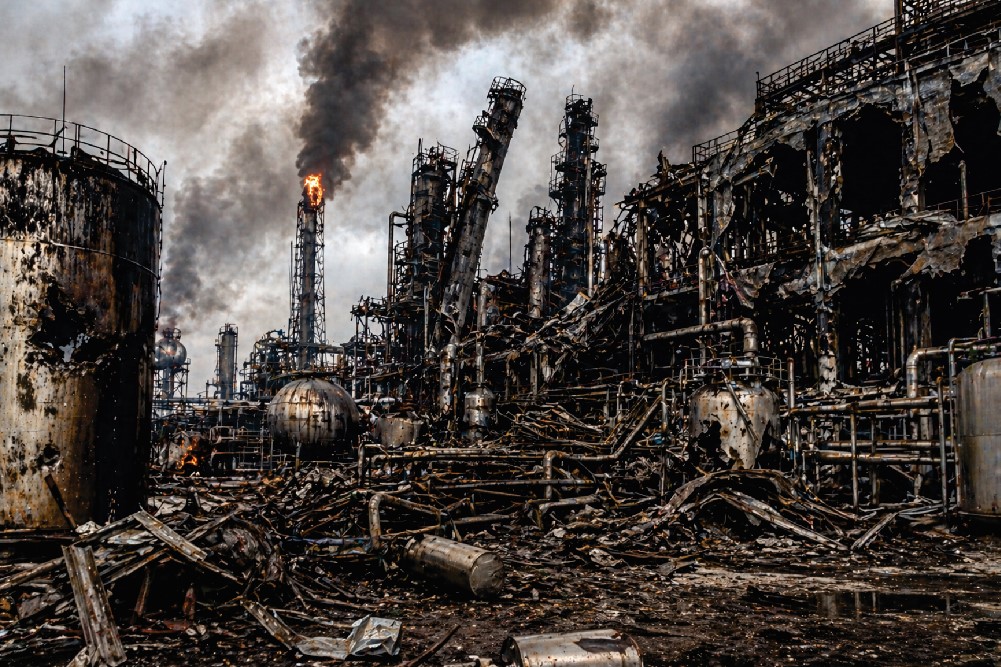
Energy is both a weapon and a battlefield
- May 8, 2026
- 0
When military objectives collide with structural economic dependencies, conflicts rarely remain confined to their original purpose. The confrontation that began on February 28 between the U.S. and Israel has, within a few weeks, transformed into a far more serious battle for control over the foundations of the global energy system.
The oil and gas networks of the Persian Gulf have effectively become the center of the conflict, with both sides signaling that economic pressure is now as important as military dominance. Iran views attacks on its power plants and energy infrastructure as confirmation of an effective blockade of the Strait of Hormuz, triggering turbulence in the global economy.
Iran’s decision on March 1 to close the Strait of Hormuz was not merely an act of retaliation, but a calculated demonstration of its enduring ability to disrupt global resources.
Responsible for transporting nearly one-fifth of global oil and liquefied natural gas (LNG) flows, the Strait of Hormuz remains the most critical pressure point in the international energy system. Iran’s actions—halting tankers, disrupting GPS (Global Positioning System), and issuing explicit threats—have had far-reaching consequences.
Israel’s attack on South Pars and Iran’s subsequent swift response targeting Qatar’s Ras Laffan complex were not symbolic actions; they struck at vital nodes of the global energy infrastructure. Damage to LNG facilities, in particular, has exposed the fragility of supply chains that support economic stability from Europe to East Asia. Parallel attacks in the United Arab Emirates, Saudi Arabia, and elsewhere further indicate that the scope of the conflict has widened, engulfing the Gulf’s entire export system.
Notably, the range of targets is expanding—from ports and desalination plants to data centers and airports—bringing critical infrastructure increasingly into the conflict zone. The economic consequences have been swift and severe. Energy markets, already operating under tight conditions, are reacting with heightened volatility.

Price surges, supply disruptions, and cascading effects across sectors—from aviation to agriculture—underscore how regional instability can generate systemic global shocks. Gulf nations, long considered pillars of stability in global energy markets, now find themselves directly under threat.
If ground operations expand or further attacks target power plants, the conflict could drag on for months, pushing baseline energy prices even higher and further fragmenting the global order.
The deliberate targeting of infrastructure marks a departure from conventional conflict, signaling an intent to impose systemic costs on the global economy.
The conflict is already intensifying global economic instability and signaling the emergence of a new era—one where Gulf hydrocarbons are both a weapon and a target. The normalization of infrastructure targeting, the weaponization of critical maritime routes, and the deepening of multipolar alliances all point toward a more fragmented and unstable world order.
The Iran conflict of 2026 is not merely a regional confrontation, but a defining moment in the evolution of 21st-century geopolitics—where energy is both an instrument of power and a battlefield in itself.
👇 Please Note 👇
Thank you for reading our article!
If you don’t received industries updates, News & our daily articles
please Whatsapp your Wapp No. or V Card on 8278298590, your number will be added in our broadcasting list.
Join our Whatsapp Channel “Ply & Panel Ind. News”




 Hindi
Hindi 
Ply insight launched on March 2018 with a vision to make a platform to collaborate plywood MDF, Laminate, machinery manufactures with dealers in the Trade.
Categories
Useful Links
Follow Us