


How Quality Control can help in enabling requirements of Global Value Chains (GVCs)
- January 10, 2026
- 0
The previous Issue (Dec, 2025) of Ply Insight spoke about ‘An Opportunity to Transform the MSME Sector’ – wherein, the article spoke about the inability to have a structural setup meeting the requirements of Global Value Chains (GVCs), which involve complying with complex international certifications.
Primarily, the financial squeeze in creating the structural setup comes out of the inability of an MSME to plan, implement, and budget the financial resources for enabling the upgrades. Financial resources for the required structural setup can be made available from within the factory operations, itself, without having the need to raise funds from elsewhere. This only needs practical functioning of the planning, implementing, and budgeting cycle.
PLAN – to save financial losses in manufacturing through Quality Control (QC).
IMPLEMENT – the identified priority QC points, in the first phase.
BUDGET – the above savings for structural setup upgrade for GVC compliances.
This process will create a better level of confidence and energy, for the factory owner to go Global.
How strict QC implementation can, save money and improve confidence?
Invest smart, for larger benefits – must be the motto & vision of micro-small factories.
Some examples of mistakes made by most of the micro-small factories:
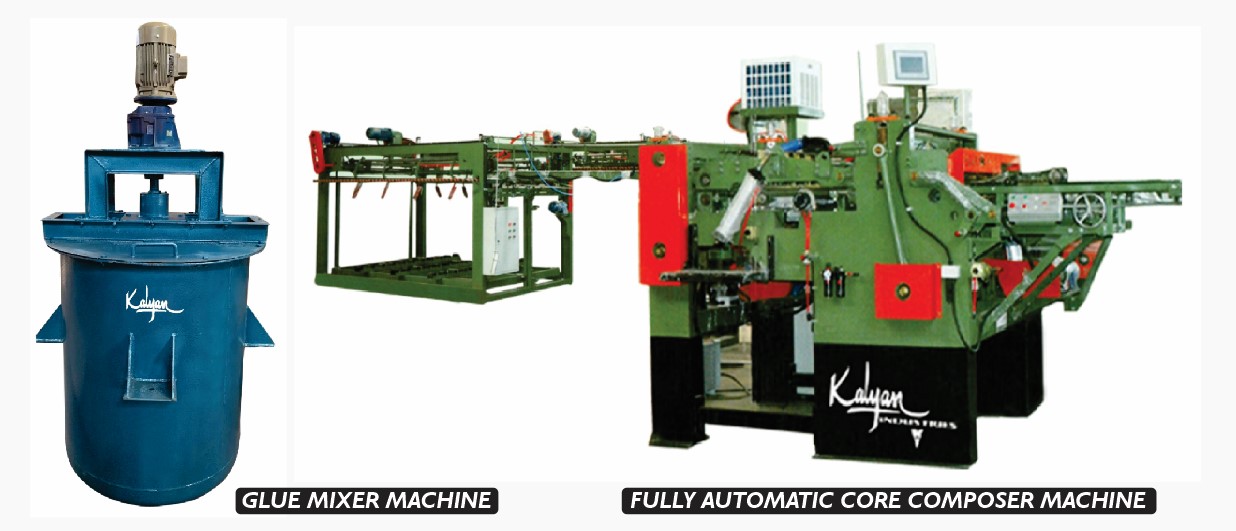
Scenario 1: Purchase and install the best resale-value hot press in the industry, paying 25% higher than normal. But, scramble around for making a ₹50,000/- glue mixer, and to experience the satisfaction & fulfillment of self-smartness. (Inability to purchase a ₹2.5 lakhs good quality Glue Mixer.)
Scenario 2: Purchase the best calibrator-sander machine for the factory, at ₹60 Lacs. But, install the cheapest sanding belt, operated by semi-skilled and unscientific operators.
Scenario 3: Installing the best core composer in the industry, for ₹25 Lacs. But, using a low cost, low tack hot melt glue, and being unaware about adjusting the side chopping width to least optimum in the composer. Again, unscientific and semi-skilled floor managers and operators.
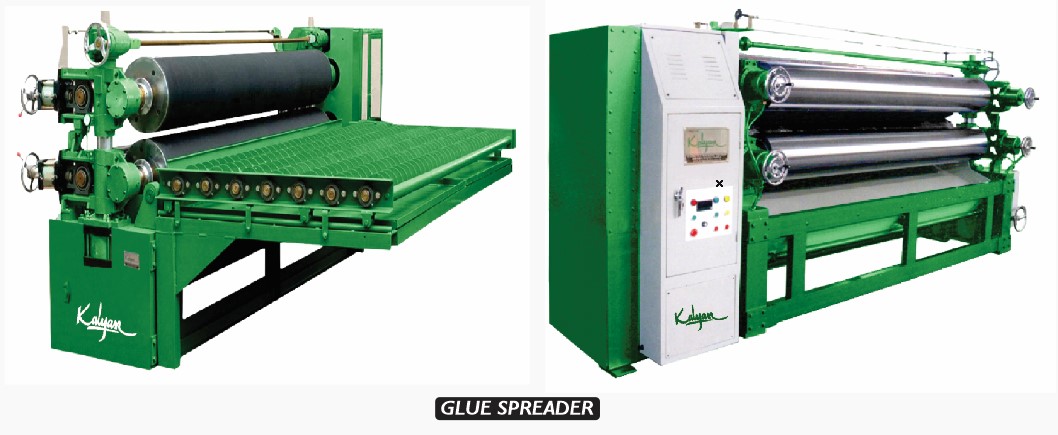
Scenario 4: Lack of awareness in Glue spreader quality, glue spread consistency, glue wastage in each of the glue spreaders, and also in the cleaning & restarting process.
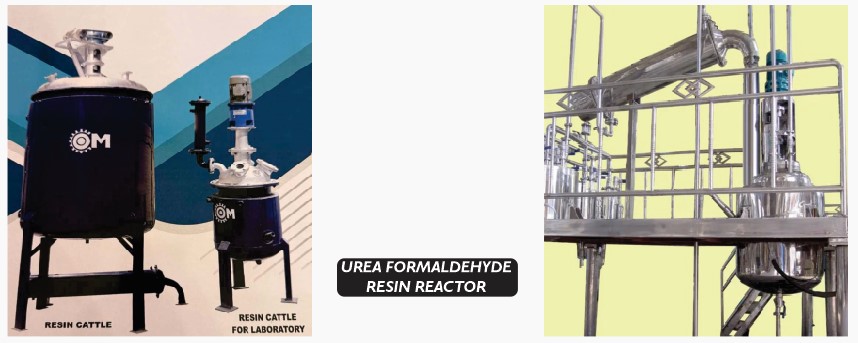
Scenario 5: Apoorly planned and designed resin plant with no material handling facility and safety. Keeping low paid resin kettle operators, who are made to ‘manage’ the extreme work environments, thus ‘enabling’ poor work and productivity. Saving a few thousands a month. (No planning, awareness, or intention to facilitate.)
 Floor Quality Control (QC) Audit
If we look at the above 5 example scenarios, we shall be able to get a fair idea of where & how we can save a lot of money, to generate the financial resources needed for GVC structural upgrade, provided the intention is consistent.
A floor quality control staff must be present in all factories – micro or small. The QC person will collect data in all the 5 scenarios, 5 to 6 times a day. This creates a system of daily floor audit (monitoring, data collection, reporting, and corrections) during the processes. Regular collection & monitoring of data is the first step towards money-saving process.

Scenario 1: Purchasing a low-quality glue mixer, or fabricating one using make-shift methods may feel like a technical achievement in the immediate time period. However, it may be quite late, when a factory owner realizes his board quality losses – due to inconsistent mixing, lack of consistency in bonding, and glue handling wastages.
Lakhs of money can be lost in complaints of core layer delamination, face veneer chipping, nailing-splits, water resistance inconsistencies etc.
The market is an unforgiving ocean with unknown depths, currents, and predators.
 Standardized QC process can lead to:
- Reduced resin/material wastes.
- Improved ratio of wastage to actual glue-layer consumption, against the resin plant supply data.
- Reduction in delamination, splitting, opening, face chipping complaints.
- Many more indirect advantages and cost savings.
- Saving 10 boards from becoming lower grade or reject, may save ₹15,000/- per day for the factory. That’s 3.75 lakhs in a month.
Scenario 2: Unscientific operators in calibrator-sander machines can ruin its efficiency and output.
Consistent QC process can lead to –
- Better sourcing and life of sanding belts.
- Reduced defects post-calibration.
- Reduced shave-off in thickness, thereby saving on raw material costs.
Scenario 3: Monitored quality checks in core composer can help with –
- Reduction in hot melt glue wastes.
- Reduction and optimization in side cutting loss.
- Example, if edge chopping loss is reduced from an average of 12mm per core veneer piece, to 9mm in width, there is a reduction of 25% raw material width loss in processing.
Scenario 4: Glue spreader process & operation remains a critical money-saving scenario in a plywood factory. Huge gains can be experienced from optimized glue spreader operations. Strict monitoring and corrections with quality control can help in –
- Reducing uneven glue spread. (Monitor core veneer spread, area-wise on the veneer.)
- For example: 28 grams per sqft (gsf) can be achieved with 21g on one half + 35g on other half, OR, 19g + 26g + 39g in three divisions of a core veneer. Whereas the actual glue spread consistency must remain within ±2 grams across all areas of the core veneer.
- Reducing delamination defects and lower-grade conversions.
- Reduction in ratio of actual glue consumption to total glue consumption.
- Monitoring daily glue spreader wastes.
- Tracking of cleaning and
- Cleaning water-dilution of glue during next restart. (An often-ignored data.)
Scenario 5: The resin plant is a major area of material wastage and opportunity to optimize. Strict Quality Control in the resin plant can help in –
- Reducing chemical wastes.
- Maintaining solids content and consistency of resin parameters. (Which can in turn decide the quality of boards.)
- Ensuring precise following of cooking SOPs.
Planning and implementing these actions may lead to lakhs of rupees monthly savings, from internally piled up quality-inconsistency losses.
These savings can be estimated, and budgeted into compliances like CARB P2 (E0 Certification – 4L per year), FSC (Chain of Custody – 2 to 3L per year), Fire Retardant (FR – 1.5 to 2L per year).A self-sufficient in-house laboratory costs 10 lakhs as a one-time investment.
It is a fact, that micro-small sector manufacturing units which cannot adapt sooner to the changing market requirements in plywood and boards – with respect to quality, consistency, pricing, and placement, may find it difficult to sustain techno-commercially.
As the world becomes a smaller village, with each passing year, consumer awareness, requirements, expectations, and aspirations in their societies, are redefining the way industries need to self-standardize – from the bottom upward.
👇 Please Note 👇
Thank you for reading our article!
If you don’t received industries updates, News & our daily articles
please Whatsapp your Wapp No. or V Card on 8278298590, your number will be added in our broadcasting list.




 Hindi
Hindi 
Ply insight launched on March 2018 with a vision to make a platform to collaborate plywood MDF, Laminate, machinery manufactures with dealers in the Trade.
Categories
Useful Links
Follow Us