


The Looming Shadow of Recession Emerging from the West Asia Crisis
- June 13, 2026
- 0
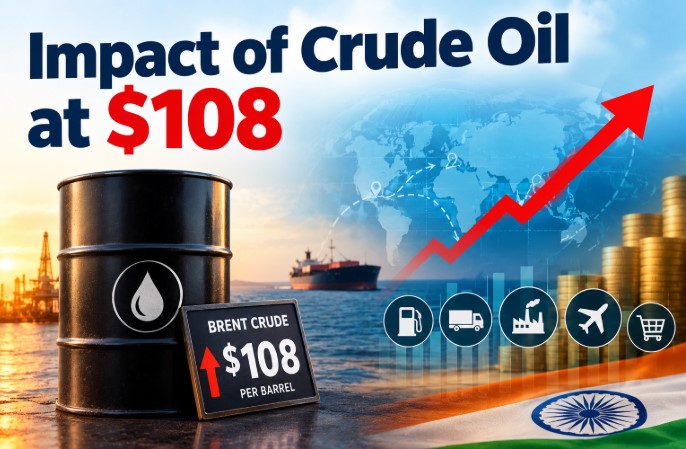
Government-owned oil companies, which had kept petrol and diesel prices unchanged for four years, have finally started increasing prices. As a result, inflation—which had remained below 4 percent for several months—is also expected to rise.
Rising prices are disturbing household budgets, and in an already slowing economy, declining business earnings are beginning to affect demand in the consumer goods sector and businesses are re-evaluating their expenses, supply chains, sales strategies, and demand forecasts.
Prices of essential commodities have already increased by 2 to 7 percent. This is despite the fact that the recent price hike compensates for only one-third of the losses oil companies are suffering from selling petrol, diesel, and cooking gas below market prices.
Oil marketing companies are currently facing monthly losses of around ₹30,000 crore on fuel sales. If even half of this burden is passed on to consumers, household budgets could suffer an annual impact of more than ₹2.0 lakh crore.

There may be disagreement over how severe the demand slowdown caused by the West Asia crisis may become. However, one important factor that is often overlooked this time is its impact on stock market wealth. India now has over 24 crore demat and trading accounts, with nearly 30 lakh new accounts being added every month.
Since the beginning of the year, stock market wealth has declined by nearly ₹40 lakh crore. Domestic institutional investors hold around 25 percent of total market capitalization, and more than one-third of that belongs to retail investors through mutual funds. And as such, Indian households have lost nearly ₹10 lakh crore in stock market wealth.
Major companies have already reduced their volume growth forecast for the current calendar year. Manufacturers are preparing for a difficult demand environment while also being forced to increase prices repeatedly due to rising raw material and freight costs.
However, forecasts of a weak monsoon, its possible adverse impact on rural confidence and incomes, along with rising food prices, suggest that challenges are likely to increase for India’s consumer market and manufacturers across sectors.
👇 Please Note 👇
Thank you for reading our article!
If you don’t received industries updates, News & our daily articles
please Whatsapp your Wapp No. or V Card on 8278298590, your number will be added in our broadcasting list.
Follow our Whatsapp Channel”Ply & Panel Ind. News”


 Hindi
Hindi 
Ply insight launched on March 2018 with a vision to make a platform to collaborate plywood MDF, Laminate, machinery manufactures with dealers in the Trade.
Categories
Useful Links
Follow Us