


Unlocking the Potential of the Wood-based Industry Perspective
- December 12, 2025
- 0
Evolution of forest policy and impact on industry
As per the National Forest Policy of 1952, Indian forests were the primary source of raw material for the wood-based industry, while domestic needs were largely met through nearby forests and village woodlots.
However, with the introduction of the National Forest Policy in 1988, the industry was encouraged to establish direct partnerships with farmers to fulfill its raw material requirements.
During the 1980s and 1990s, the State Forest Departments (SFDs) implemented externally aided social forestry projects, which included provisions for promoting wood production in the private sector by popularizing agroforestry practices.
Following economic liberalization in 1991, the demand for wood and wood products grew rapidly. To meet this surge, the import of wood and related products was liberalized in 1996, resulting in a significant rise in imports.
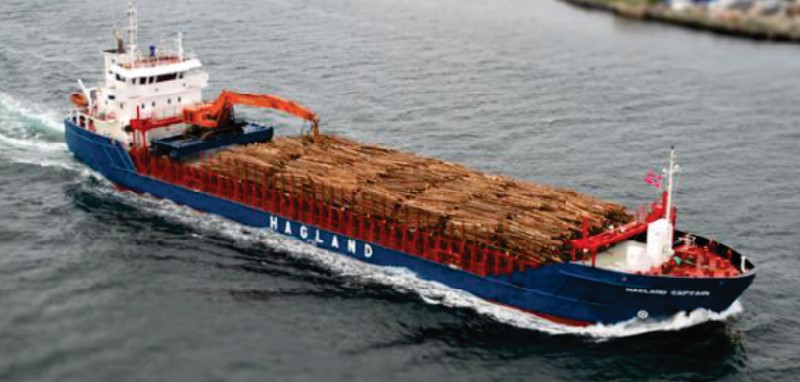
Import and Export of Wood and Wood Products
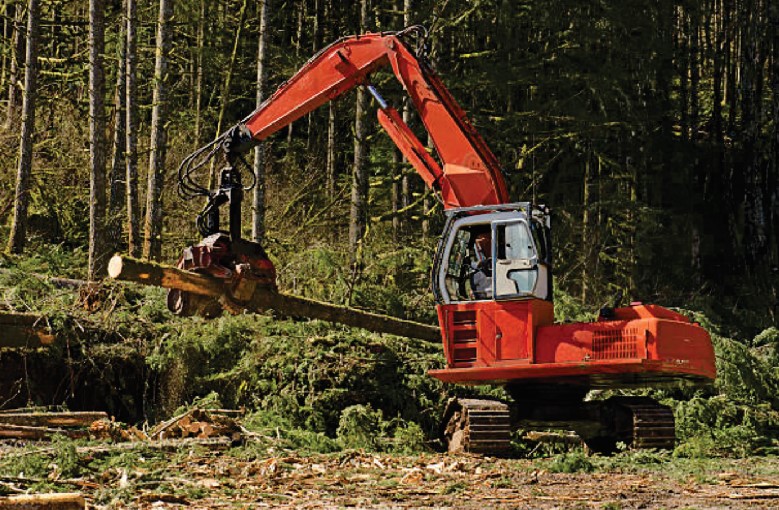
The landmark 1996 judgment of the Hon’ble Supreme Court in the Godavarman case ordered restrictions on felling of trees in government forests and the deemed forests not covered under approved working plans. This led to a sharp decline in wood production, which currently stands at approximately 2.3 million cubic meters annually (ICFRE, 2025).
At present, most of the timber demand is met through Trees Outside Forests (TOFs), particularly from agroforestry, contributing around 124.6 million cubic meters (ICFRE, 2025).
Το bridge the gap between supply and demand, imports have risen significantly and currently amount to 56.1 million cubic meters in roundwood equivalent (RWE) terms (ICFRE, 2025).
India imports a wide range of wood-based products, including:- panels, wooden products, pulp, wood chips, wastepaper, newsprint, paper &paperboards, and furniture.
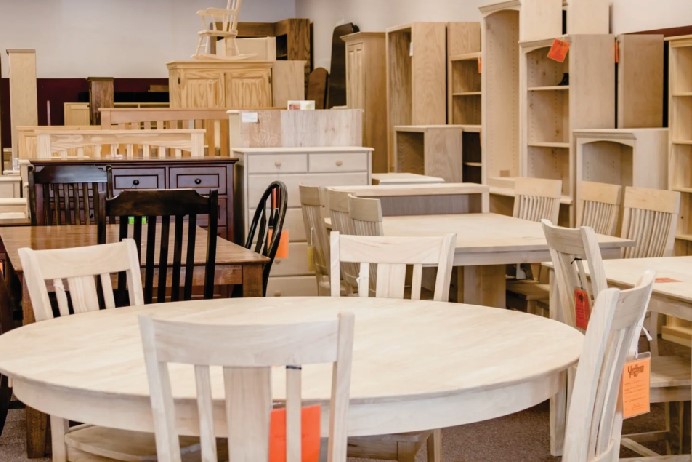
While India also exports value-added items such as:- antique furniture, wooden handicrafts, toys, and swings.
The current export volume of wood and wood products stands at approximately 14.9 million cubic meters RWE (ICFRE, 2025). Although both import and export of wood products have shown an upward trend, the value of exports remains significantly lower than that of imports. This indicates that India is predominantly a net importer of wood and wood-based products.
In 2022-23, imports were valued at 771,690 million, accounting for 1.5% of the country’s total imports (Dhiman, 2025).
Demand for Timber in the Wood-based Industry
The wood-based industry in India can be broadly classified into three categories:
(1) sawn timber (e.g., construction, furniture, handicrafts),
(2) composite wood panels, and
(3) paper and pulpwood.
The sector is predominantly unorganised, with a significant share of enterprises falling under the Micro, Small, and Medium Enterprises (MSME) category.
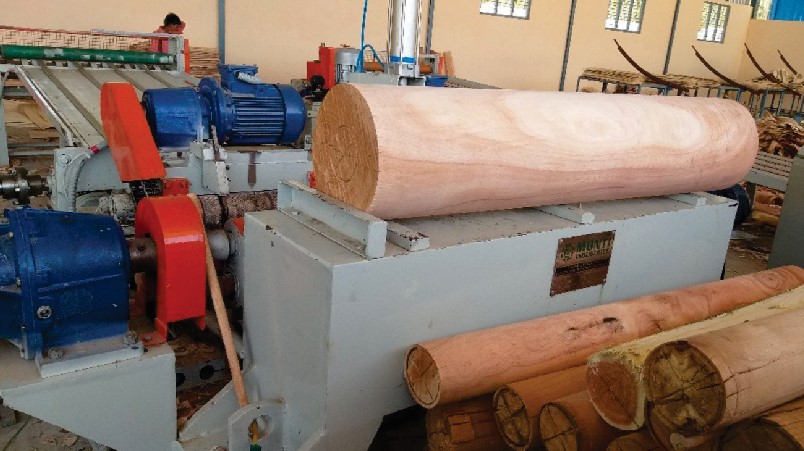
The pulp and paper industry, which directly employs over 0.6 million people and indirectly supports around 1.6 million, comprises about 759 paper mills nationwide (Kant et al., 2021). Their combined projected demand for wood is estimated at 21.7 million cubic meters (RWE) (ICFRE, 2025).

The demand for wood in the handicrafts and miscellaneous sectors is projected to be 13.4 million cubic meters.
According to the FIPPI: the plywood sector
80% of production in the unorganised sector and the remaining 20% in the organised sector.
This sector comprises 3,132 units and provides direct employment to over 1 million individuals.
The projected demand is about 70.5 million cubic meters.
PB and MDF Ind. there are 47 particle board (PB) and 12 medium-density fibre board (MDF) manufacturing units in the country, which together consume around 9.1 million cubic meters (RWE) of wood (ICFRE, 2025).
The projected demand for wood in the construction industry currently stands at approximately 6.0 million cubic meters (RWE).
 Promoting Integrated Models of Agroforestry and Wood-based Industry
To address the shortage of raw materials, WIMCO Seedlings Ltd. (formerly in Uttar Pradesh, now in Uttarakhand) pioneered the promotion of poplar farming in 1984. This was achieved by:- supplying quality planting material, facilitating loan arrangements, developing scientific packages of practices, and offering assured buy-back agreements.
Encouraged by these efforts, progressive farmers in Uttar Pradesh, Punjab, and Haryana adopted poplar cultivation, finding it more profitable than traditional agricultural crops.
Research and development efforts by the Forest Research Institute (FRI), Dehradun, further strengthened the foundation for large-scale cultivation of poplar and eucalyptus (Sapra, 2025).
Similarly, ITC Bhadrachalam Pvt. Ltd., has played a key role in South India since 1989, promoting the cultivation of clonal eucalyptus, casuarina, and subabul. These initiatives not only helped meet the company’s raw material needs but also encouraged widespread adoption of clonal eucalyptus plantations across the country (Sapra, 2025).
The relatively high returns from farmland plantations have created healthy competition with conventional agriculture. However, the area under agroforestry continues to fluctuate based on the comparative profitability of timber versus agricultural crops.
Due to high domestic wood prices, India has increasingly relied on imports of poplar, pine, eucalyptus, and other species. This has helped stabilize domestic prices and improve raw material availability.
To strengthen the wood-based industry, India must adopt an ambitious vision of doubling timber production to 250 million cubic meters by 2047.
Achieving this goal will require a two-pronged strategy: (1) expanding the area under agroforestry, and (2) increasing the average productivity of timber crops.
Currently, agroforestry covers approximately 3.9% of India’s geographical area (FSI, 2023). Therefore, promoting integrated models that link agroforestry with wood-based industry development is essential to realize this vision and ensure long-term sustainability.
Policy Initiatives Required
Leading global furniture manufacturers such as IKEA, Hettich, and Casa Shamuzzi have already made significant investments in India, establishing furniture manufacturing clusters near ports to optimize logistics. IKEA has launched retail outlets in major metropolitan cities, while domestic online furniture brands like PepperFry, Urban Ladder, and FabFurnish have entered the market. E-commerce giants Amazon and Flipkart have also expanded into this segment.
Additionally, numerous plywood factories have emerged in port-adjacent areas such as Kandla (Gujarat), leveraging easier access to imported raw materials. The entry of foreign players has positively impacted the sector by aligning with the aspirations of India’s growing middle class and enhancing exports of wood products. In support of these developments, the Government of India has launched the Aatmanirbhar Bharat Abhiyan to reduce import dependency and promote the export of indigenous products.
To further accelerate growth and promote self-reliance in this sector, the following policy initiatives may be considered for inclusion in the Union Budget 2026-27:
- Encourage large wood-based industrial units by extending the benefits of the Production Linked Incentive (PLI) Scheme.
- Constitute a dedicated Agroforestry Development Board to coordinate agroforestry promotion and policy implementation across states.
- Promote investments in tree plantations through incentives such as discounted loans, capital subsidies, and risk mitigation measures for farmers and industries.
- Revise the EXIM Policy to support the goals of Aatmanirbharta in wood and wood products by discouraging non-essential imports and promoting exports of value-added wood-based goods.
The wood-based industry is labour-intensive and provides employment primarily to school dropouts. It relies on wood-a renewable resource as its raw material. Cultivating trees for wood production offers farmers higher income compared to traditional crops, while also generating employment in rural areas.
Additionally, tree crops offer several environmental benefits: they protect agricultural crops, sequester carbon, mitigate climate change, and contribute to groundwater recharge. Given these multifaceted benefits, there is a strong case for large-scale promotion of the wood processing industry.
A strong policy thrust for the rapid development of wood-based industry will have far-reaching benefits. It will boost rural and urban employment, stimulate entrepreneurship, increase foreign exchange earnings, and reduce pressure on natural forests-ultimately contributing to environmental conservation.
References
- Dhiman, R. C., 2025: Pramaan to Parinaam, The Ply Reporter, August 2025
- FSI, 2023. India State of Forest Report 2023, Forest Survey of India, Dehradun
- ICFRE, 2025. Assessment of Demand and Supply of Timber, Fuelwood and Fodder in India (AICRP-12), ICFRE, Dehradun
- Kant, P., Nautiyal, R., 2021. India Timber Supply and Demand 2010-2030, International Tropical Timber Organization, Yokohama
- Sapra, R. K., 2025. India’s Forest and Tree Cover: A Decade of Change and Challenges (2013-2023), Van Premi, February 2025
👇 Please Note 👇
Thank you for reading our article!
If you don’t received industries updates, News & our daily articles
please Whatsapp your Wapp No. or V Card on 8278298590, your number will be added in our broadcasting list.



 Hindi
Hindi 
Ply insight launched on March 2018 with a vision to make a platform to collaborate plywood MDF, Laminate, machinery manufactures with dealers in the Trade.
Categories
Useful Links
Follow Us