

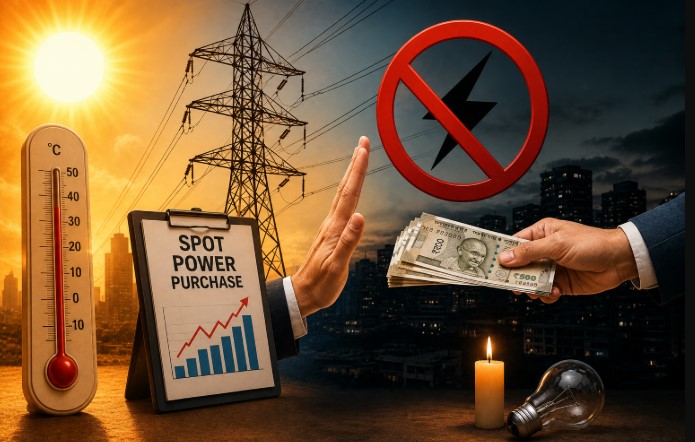
Apart from Heatwaves, Reluctance to Buy Spot Power Also Causing Power Cuts
- May 28, 2026
- 0
Grid-India’s data shows only a marginal power shortage, but the actual ground reality of power cuts tells a different story.
Power adequacy is assessed at the state level, not at the household level. Once electricity reaches the state boundary, it passes through the state transmission utility and then through DISCOMs before reaching consumers. The system may appear adequate on paper, but it does not reflect the actual shortages being faced by consumers.
There are several reasons behind power cuts: outdated distribution infrastructure, reluctance to buy expensive spot power, transmission bottlenecks, and pressure on thermal power plants. Many power distribution companies (DISCOMs) have aging infrastructure that cannot handle high temperatures and peak demand simultaneously.
Perhaps the biggest issue exists at the local grid level. Many transformers, feeders, and transmission lines are old and heavily overloaded. During heatwaves and peak summer demand, transformers fail and feeders trip, causing local power outages even when electricity is available in the overall system.
In addition, the pressure on thermal power plants to frequently increase or reduce electricity generation depending on renewable energy availability is also contributing to forced load shedding.

What is Spot Power?
Spot Power (Spot Power or Real-Time Power) refers to electricity that is bought or sold in the spot market for immediate delivery. Unlike long-term Power Purchase Agreements (PPAs), spot power transactions are conducted for durations ranging from a few minutes up to the next day (Day-Ahead).
How Does Spot Power Work?
- Immediate Transactions: Buyers and sellers bid on electricity exchanges such as the Indian Energy Exchange (IEX) based on real-time prices.
- Time Duration: Electricity is generally traded in 15-minute blocks.
- Demand and Supply Impact: If electricity demand suddenly rises in a region, spot power prices increase sharply. On the other hand, when renewable energy sources such as solar generate excess power, prices can fall significantly.
Private and state government power distribution companies (DISCOMs) purchase electricity from the spot market when they are unable to meet demand within their state.
Even though DISCOMs often anticipate higher demand, in many cases they prefer load shedding instead of purchasing expensive spot power.
Although it cannot be deemed illegal, the consumer is nonetheless compelled to endure the inconvenience of power cuts.
👇 Please Note 👇
Thank you for reading our article!
If you don’t received industries updates, News & our daily articles
please Whatsapp your Wapp No. or V Card on 8278298590, your number will be added in our broadcasting list.
Join our Whatsapp Channel “Ply & Panel Ind. News”




 Hindi
Hindi 
Ply insight launched on March 2018 with a vision to make a platform to collaborate plywood MDF, Laminate, machinery manufactures with dealers in the Trade.
Categories
Useful Links
Follow Us