

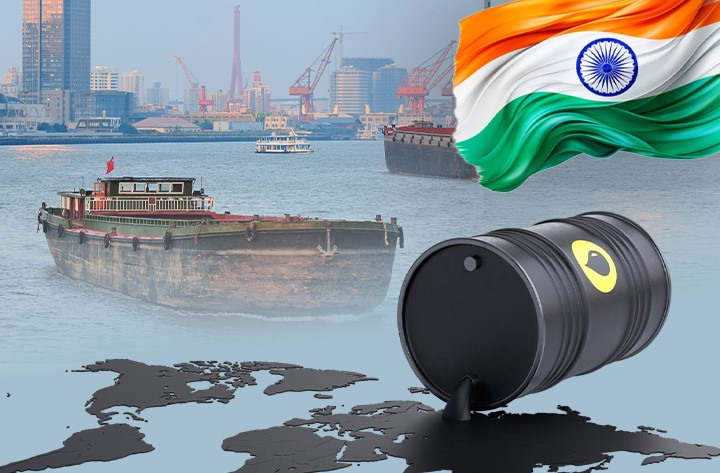
Can India capitalize the current oil crisis?
- May 9, 2026
- 0
The current oil crisis highlights India’s urgent need for energy security, as about 85% of petroleum consumption depends on imports. With rising crude prices, the import bill could double, putting pressure on the economy and weakening the rupee.
Following means can be targeted:
- Shift freight from road to rail: A major portion of diesel (especially 50 Mt used by trucks) can be reduced by moving long-distance goods transport to railways. Improving railway efficiency, lowering freight tariffs, and expanding dedicated freight corridors (DFCs) can help achieve this.
1A. Railway reforms: Introduce Trucks-on-Train (ToT) systems, increase availability of flat wagons, and improve reliability and delivery timelines to compete with road transport.

1B. Reduce petroleum consumption: Target shifting 50% of freight to rail by 2030 and 90% by 2035, which could significantly cut diesel usage and overall fuel consumption.
- Promote alternative fuels: Ethanol blending (20%) helps reduce petrol consumption, but better sources like agricultural waste should be used instead of corn. Government schemes should support ethanol plant setup as well as procurement.
- Boost electric vehicles (EVs): India aims for large-scale EV adoption by 2030 across cars, buses, and two/three-wheelers, potentially reducing fuel demand significantly.
- Improve bio fuel ecosystem: Develop systems for collecting agricultural waste and producing biofuels efficiently.
Conclusion:
A combination of railway reforms, EV adoption, ethanol use, and logistics improvements can reduce India’s dependence on oil imports. The current crisis should be used as an opportunity to strengthen long-term energy security and sustainable growth.
👇 Please Note 👇
Thank you for reading our article!
If you don’t received industries updates, News & our daily articles
please Whatsapp your Wapp No. or V Card on 8278298590, your number will be added in our broadcasting list.
Join our Whatsapp Channel “Ply & Panel Ind. News”



 Hindi
Hindi 
Ply insight launched on March 2018 with a vision to make a platform to collaborate plywood MDF, Laminate, machinery manufactures with dealers in the Trade.
Categories
Useful Links
Follow Us